
Tissue Paper Making Line: Complete Process Flow, Key Equipment & Performance Optimization
Tissue paper production demands exceptional precision across every stage of the manufacturing process. From facial tissues and toilet paper to kitchen towels and napkins, modern tissue machines operate at speeds exceeding 2,000 meters per minute while maintaining strict quality parameters for softness, absorbency, and tensile strength. A well-designed tissue paper making line integrates stock preparation, sheet forming, pressing, drying, and converting into a seamless workflow that directly impacts mill profitability.
For tissue producers, the difference between a standard operation and a high-performance line often comes down to equipment selection and process optimization. This article examines the complete tissue paper making line, highlighting critical equipment specifications, performance benchmarks, and practical strategies for maximizing output while controlling operational costs.
Understanding the Tissue Paper Making Line Process Flow
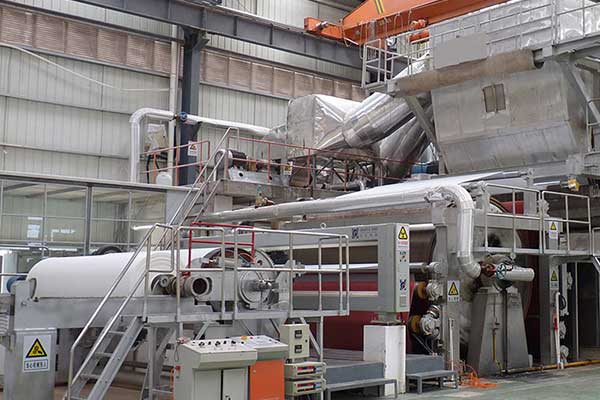
The tissue manufacturing process begins with fiber preparation and extends through multiple stages before finished rolls emerge. Each stage presents opportunities for optimization:
1. Stock Preparation: Virgin pulp or recovered fiber enters the system through pulping equipment operating at 3-5% consistency. High-consistency cleaners remove heavy contaminants, while pressure screens with 0.15-0.35 mm basket perforations eliminate lightweight debris. The refined stock then passes through disc refiners where specific edge load typically ranges from 0.8 to 1.5 W·s/m, developing fiber bonding properties without excessive fines generation that would compromise drainage on the tissue former.
2. Approach Flow System: The cleaned stock is diluted to 0.1-0.3% headbox consistency through a multi-stage approach system. Fan pumps rated at 150-400 kW deliver precise flow control, while machine screens with 0.8-1.2 mm basket slots provide final-stage protection. Deaeration systems remove entrained air that would otherwise cause pinholes and sheet breaks during formation.
3. Crescent Former: Most modern tissue machines employ crescent former technology, where the jet from a hydraulic headbox impinges between a forming fabric and a felt running over a forming roll. The headbox slice opening adjusts from 8-18 mm, with jet-to-wire ratios carefully controlled between 0.95 and 1.05. Water removal occurs through centrifugal force around the forming roll (typically 1,200-1,800 mm diameter), achieving 8-12% sheet dryness before the press section.
4. Press Section: The sheet transfers to a single large-diameter Yankee dryer through one or two press nips. Suction press rolls with 25-35 mm drilled shells apply linear pressures of 80-120 kN/m, raising sheet dryness to 38-45% before thermal drying. Shoe press technology, where applicable, can push post-press dryness to 48-52%, significantly reducing Yankee dryer steam consumption.
5. Yankee Dryer & Hood: The Yankee cylinder — typically 3.6-5.5 m in diameter — operates at 0.6-1.0 MPa steam pressure with surface temperatures reaching 140-180°C. High-velocity hoods deliver impingement air at 300-550°C with nozzle velocities of 80-150 m/s. Combined thermal drying achieves final moisture content of 4-7%, after which the creping doctor blade (with 5-15° bevel angle) detaches the sheet, imparting the characteristic tissue softness and bulk.
Key Equipment Specifications for High-Performance Tissue Lines
Equipment selection directly dictates line capability. The following specifications represent proven configurations for lines producing 80-200 TPD of tissue:
| Equipment | Key Parameter | Specification Range |
|---|---|---|
| Drum Pulper | Capacity / Consistency | 200-600 TPD / 3-5% |
| Pressure Screen | Basket Perforation | 0.15-0.35 mm |
| Disc Refiner | Motor / Edge Load | 250-630 kW / 0.8-1.5 W·s/m |
| Hydraulic Headbox | Slice Opening | 8-18 mm |
| Yankee Dryer | Diameter / Steam Pressure | 3.6-5.5 m / 0.6-1.0 MPa |
| High-Velocity Hood | Air Temperature / Velocity | 300-550°C / 80-150 m/s |
These specifications are interdependent. For example, increasing Yankee diameter from 3.6 m to 5.5 m can boost drying capacity by 40-55% at equivalent steam pressure, but requires commensurate upgrades to the hood system and steam condensate removal infrastructure.
Energy Consumption and Cost Optimization in Tissue Production
Energy represents one of the largest variable costs in tissue manufacturing. A typical tissue paper making line with 120 TPD capacity consumes energy across three primary categories:
Electrical Energy: The total specific electrical consumption for tissue machines ranges from 550 to 850 kWh per ton of finished product. The major electrical loads include:
- Refiners: 180-280 kWh/ton (depending on fiber type and freeness targets)
- Fan pump: 60-100 kWh/ton
- Vacuum systems: 80-150 kWh/ton
- Yankee dryer drive: 40-70 kWh/ton
- Auxiliary systems (pumps, agitation, lighting): 120-200 kWh/ton
Thermal Energy (Steam): Yankee dryer steam consumption typically ranges from 1.8 to 2.5 tons of steam per ton of tissue produced. Hood gas consumption adds another 0.6-1.2 GJ per ton, depending on hood design and operating temperature. Modern high-efficiency hoods with heat recovery systems can reduce gas consumption by 15-25% compared to conventional designs.
Optimization Strategies: Mills can achieve measurable reductions through several approaches. Increasing post-press dryness by just 2 percentage points (e.g., from 42% to 44%) reduces Yankee steam consumption by approximately 6-8%. Installing variable frequency drives on fan pumps and vacuum pumps can trim electrical consumption by 12-20%. Heat recovery from hood exhaust — capturing air at 180-250°C — can preheat combustion air and process water, recovering 40-60% of the thermal energy that would otherwise be vented to atmosphere.
Maintenance Best Practices for Tissue Paper Making Equipment
Systematic maintenance programs prevent unplanned downtime while extending equipment service life. The following schedule addresses critical tissue line components:
Daily Checks:
- Yankee dryer surface temperature uniformity (verify within ±3°C across face width)
- Creping doctor blade condition — inspect for edge chipping and uniform contact
- Forming fabric and felt tracking alignment
- Vacuum pump seal water flow and temperature
Weekly Tasks:
- Clean Yankee hood nozzles to maintain uniform impingement
- Inspect forming roll and press roll bearing temperatures (normal range: 55-75°C)
- Check refiner plate wear — replace when bar edge radius exceeds 0.3 mm
- Verify headbox slice lip parallelism to within 0.05 mm across width
Monthly Maintenance:
- Full pressure screen basket inspection and chemical cleaning if differential pressure exceeds 30 kPa above baseline
- Refiner plate gap calibration and plate replacement evaluation
- Lubrication system filter replacement for all major bearing housings
- Condensate removal system inspection — verify siphon clearance from Yankee shell (typically 1.5-2.5 mm)
Annual Shutdown:
- Yankee dryer internal inspection and thickness measurement (minimum shell thickness per design specification)
- Complete felt and fabric replacement
- Headbox disassembly and cleaning, including dilution control valve calibration
- Major drive gearbox oil analysis and replacement
Felt life in tissue applications averages 40-60 days depending on operating conditions, while forming fabrics typically last 90-150 days. Tracking these replacement cycles in the maintenance management system helps predict future requirements and budget accordingly.
Fiber Quality and Its Impact on Tissue Paper Making Line Efficiency
Fiber selection directly influences machine runnability, product quality, and operational costs. The two primary fiber categories used in tissue production deliver distinctly different performance characteristics:
Hardwood Kraft Pulp (Eucalyptus, Acacia, Birch): Short fibers (0.7-1.2 mm length) contribute to sheet softness, smoothness, and bulk. Hardwood typically comprises 60-80% of the fiber furnish in premium tissue grades. The high fines content of hardwood pulps (15-25% passing 200 mesh) increases water retention value, which demands greater refining energy but produces tissue with superior hand feel. Freeness targets for hardwood in tissue applications typically range from 500-600 mL CSF.
Softwood Kraft Pulp (Pine, Spruce, Fir): Long fibers (2.5-4.5 mm length) provide the tensile strength necessary for machine runnability at high speeds. Softwood typically constitutes 20-40% of the furnish. Refining softwood to 550-650 mL CSF develops fiber bonding while preserving the fiber length that prevents sheet breaks during creping and winding.
The blend ratio requires careful optimization. Excessive softwood content increases raw material cost and reduces softness; insufficient softwood compromises runnability. For machines operating above 1,800 m/min, softwood content below 15% is rarely viable regardless of hardwood quality. Fiber cost typically represents 45-55% of the total production cost in tissue manufacturing, making this optimization critical for mill profitability.
Conclusion: Building a Competitive Tissue Paper Making Line
A successful tissue operation balances production speed, energy efficiency, product quality, and maintenance reliability. The crescent former with a properly sized Yankee dryer remains the dominant technology for good reason — it delivers the combination of speed and quality that defines competitive tissue manufacturing. However, the supporting systems — stock preparation, approach flow, vacuum, and heat recovery — often determine whether the line achieves its rated performance or falls short.
Equipment specifications must match the intended product mix. A line optimized for 18 g/m² facial tissue faces different requirements than one producing 35 g/m² kitchen towel. Similarly, furnish characteristics must align with refining and drainage capabilities. Mills that invest time in understanding these interdependencies consistently outperform those that treat each subsystem in isolation.
Whether upgrading an existing line or planning new capacity, the engineering decisions made during design and equipment selection reverberate through years of operation. Contact us at leizhanzhang@gmail.com to discuss your tissue paper making line requirements with experienced professionals who understand both the technology and the business implications behind every specification choice.
Zhengzhou Leizhan Technology Paper Machinery Co., Ltd.