
Tissue Paper Making Line: Key Equipment, Energy Optimization & Production Efficiency
Tissue paper production is one of the fastest-growing segments in the global paper industry, driven by rising hygiene awareness and consumer demand for facial tissues, toilet paper, napkins, and kitchen towels. However, tissue manufacturers face intense pressure on three fronts: energy costs, fiber quality consistency, and machine uptime. A well-designed tissue paper making line can reduce specific energy consumption by 15–25% compared to older installations while delivering consistent product softness and bulk. This article examines the critical equipment stages, energy benchmarks, and maintenance practices that determine the success of a modern tissue production line.
Core Equipment in a Tissue Paper Making Line
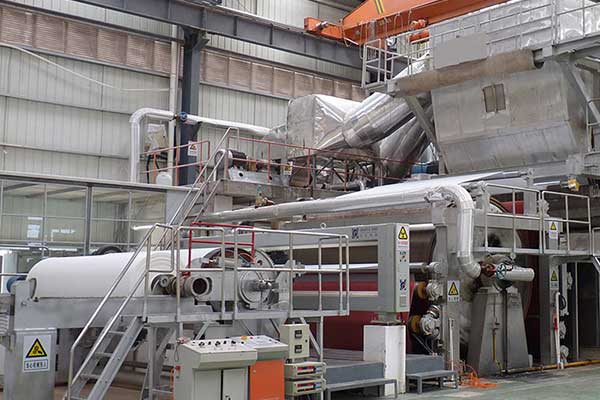
A complete tissue paper making line consists of several interconnected subsystems, each performing a distinct function. Understanding the role and performance parameters of each stage is essential for operators, production managers, and procurement teams evaluating upgrades or new installations.
1. Stock Preparation System
The stock preparation system begins with virgin pulp or waste paper pulping. For tissue grades, the pulper must achieve thorough fiber separation without damaging fiber length — a critical factor for tissue softness. Leizhan’s D-type hydrapulpers operate at 3–5% consistency with rotor speeds of 180–220 rpm, delivering homogenous pulp in 20–30 minutes per batch. Following pulping, high-consistency cleaners remove heavy contaminants at 1.0–1.5% inlet consistency, with reject rates typically below 3%.
The screening system uses 0.15–0.35 mm slots in pressure screens to remove shives and stickies. For tissue grades demanding the highest cleanliness — such as facial tissue and napkin grades — a two-stage screening cascade with 0.15 mm slotted baskets is recommended to achieve speck counts below 10 ppm.
2. Refining System
Refining is the most energy-intensive stage after drying and has a direct impact on tissue properties. The refining intensity, measured as specific edge load (SEL), should be kept at 0.8–1.5 J/m for tissue grades to develop strength while preserving bulk. Leizhan’s double-disc refiners operate at 55–75 kWh/t net refining energy for virgin fiber tissue stock, with plate diameters ranging from 20″ to 34″ depending on line capacity.
Key operating targets: freeness reduction of 80–120 mL CSF per pass, with no-load power below 30% of installed motor rating. Refiner plate life for tissue stock typically ranges from 800–1,200 operating hours when processing virgin fiber, and 500–800 hours with recycled fiber due to higher abrasive content.
3. Approach Flow and Headbox
The approach flow system delivers cleaned, screened, and diluted stock to the headbox at precisely controlled consistency and pressure. For tissue machines operating at 1,600–2,200 m/min, the headbox consistency is maintained at 0.10–0.18% with pressure pulsation below ±0.5 kPa. A well-tuned approach flow system ensures uniform basis weight profiles with CD variation under 1.5%.
4. Crescent Former and Press Section
The crescent former configuration is the industry standard for premium tissue production. It forms the sheet between the felt and the wire on a forming roll, achieving 15–22% dryness after the forming zone. The suction press roll then increases dryness to 38–42% before the Yankee cylinder. Press loading of 80–120 kN/m is typical for tissue grades, balancing water removal with bulk preservation.
5. Yankee Dryer and Hood
The Yankee cylinder is the heart of the tissue drying process. Operating at 3.5–5.5 bar(g) steam pressure, the Yankee surface temperature reaches 140–160°C. Combined with a high-temperature impingement hood delivering air at 350–500°C, the system achieves evaporation rates of 180–250 kg H₂O/m²·h. The final sheet dryness after creping is 93–96%.
Energy Consumption Benchmarks for Tissue Lines
Energy is the single largest variable cost in tissue production, accounting for 25–35% of total manufacturing costs. Understanding where energy is consumed enables targeted optimization. The following table presents typical energy distribution in a modern tissue paper making line:
| Energy Consumer | Typical Consumption | Share of Total |
|---|---|---|
| Yankee drying (steam) | 1,450–1,800 kWh/t | 55–65% |
| Hood air system (thermal + electrical) | 350–500 kWh/t | 12–15% |
| Refining (electrical) | 55–75 kWh/t | 3–5% |
| Vacuum system (electrical) | 80–120 kWh/t | 4–6% |
| Machine drive + auxiliaries | 100–150 kWh/t | 5–7% |
| Stock preparation (electrical) | 70–110 kWh/t | 3–5% |
| Total specific energy | 2,100–2,800 kWh/t | 100% |
Modern tissue lines equipped with high-efficiency Yankee hoods and heat recovery systems can reduce total specific energy to 1,800–2,100 kWh/t, representing annual savings of $80,000–$150,000 for a 100 TPD tissue mill compared to older installations.
Fiber Quality and Yield Optimization
Fiber is the second-largest cost component in tissue manufacturing. For mills using market pulp, fiber loss rates above 2% translate directly to profitability erosion. Key performance indicators for fiber management include:
- Fiber recovery rate: >98% through the save-all and dissolved air flotation (DAF) system
- Fines retention: 70–85% on the wire, critical for tissue softness and formation
- Broke handling: Re-pulped broke should not degrade fiber length by more than 5%
- Ash content in finished sheet: <2% for premium tissue grades
Leizhan’s pressurized screen systems with 0.15–0.25 mm slot baskets achieve fiber recovery rates exceeding 98.5% in the approach flow, while high-efficiency DAF clarifiers maintain effluent TSS below 30 mg/L.
Preventive Maintenance Schedule for Tissue Production Lines
Unplanned downtime on a tissue machine costs between $3,000 and $8,000 per hour in lost production and fixed cost absorption. A structured maintenance program is essential. The following schedule is recommended for a tissue line operating 340–350 days per year:
| Component | Frequency | Key Inspection Points |
|---|---|---|
| Refiner plates | Every 600–1,000 hours | Wear pattern, bar edge sharpness, plate gap calibration |
| Screen baskets | Every 3,000–4,000 hours | Slot wear measurement, foil condition, seal ring integrity |
| Yankee doctor blades | Every 8–24 hours (change) | Blade angle (15–25°), edge wear, coating uniformity |
| Forming fabric | Every 45–90 days | Permeability, seam integrity, hole/damage inspection |
| Press felt | Every 30–60 days | Caliper, permeability, edge wear, contamination |
| Vacuum pumps | Weekly checks | Seal water flow, bearing temperature, vane wear |
| Yankee shell thickness | Annual UT survey | Wall thickness uniformity, crown measurement |
Maintaining detailed maintenance logs and trending data is critical for transitioning from reactive to predictive maintenance. Mills that implement vibration monitoring on refiners and bearing temperature trending on dryer sections typically reduce unplanned downtime by 30–40% within the first year.
Selecting the Right Equipment Partner for Your Tissue Line
When evaluating equipment for a new tissue paper making line or upgrading an existing installation, consider these decision criteria:
- Proven reference installations: Equipment suppliers should have operating references at comparable speeds and capacities to your target production range.
- Energy performance guarantees: Reputable suppliers provide specific energy consumption guarantees for key equipment like refiners and dryer systems.
- Localization of after-sales support: Spare parts availability, technical service response time, and installation supervision capability are as important as the equipment itself.
- Modularity and expandability: The line should accommodate future capacity increases of 20–30% through additional equipment modules without complete replacement.
At Zhengzhou Leizhan Technology, we engineer complete tissue paper making lines with capacities from 30 to 200 TPD, covering the full process from pulping to reel. Our equipment portfolio includes hydrapulpers, high-consistency cleaners, pressure screens, double-disc refiners, and complete approach flow systems — all designed for energy efficiency and reliable operation in demanding production environments.
Contact us at leizhanzhang@gmail.com | Zhengzhou Leizhan Technology Paper Machinery Co., Ltd.