
Key Factors in Selecting a Tissue Paper Making Machine for Maximum Efficiency
Understanding Modern Tissue Production Requirements
The global tissue paper market continues to expand, driven by growing hygiene awareness and increasing demand in emerging economies. A modern tissue paper making machine must balance three competing demands: production speed, energy efficiency, and product quality. Whether producing facial tissue, toilet paper, kitchen towels, or napkins, the equipment selection process requires careful evaluation of technical specifications and long-term operational costs.
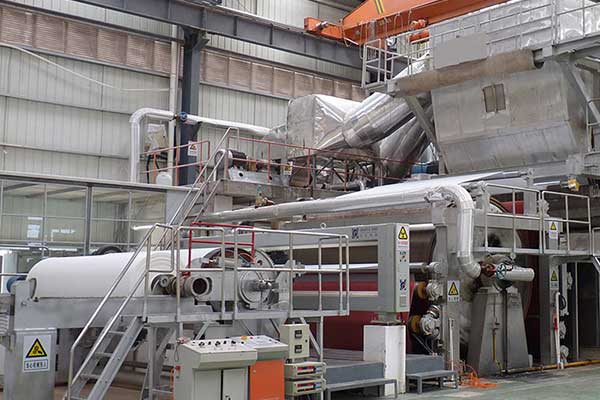
Tissue machines differ fundamentally from other paper machines due to the lightweight basis weight (typically 12–40 g/m²) and the critical role of the Yankee dryer in achieving softness and bulk. Modern crescent former configurations have largely replaced traditional fourdrinier designs for premium tissue grades, offering superior formation at higher speeds.
Production Capacity and Machine Configuration
When evaluating a tissue paper making machine, production capacity — measured in tonnes per day (TPD) — is the foundational parameter. Tissue machines from Leizhan Technology are engineered for capacities ranging from 30 TPD for smaller regional mills to over 200 TPD for large-scale production facilities. The key configuration decisions include:
- Headbox type: Hydraulic headbox with consistency control at 0.15–0.35% for uniform fiber distribution
- Former section: Crescent former design achieving jet-to-wire speed ratios of 0.95–1.05 for optimal formation
- Wire width: Typically 2.4–5.6 meters, selected based on target production volume
- Yankee dryer diameter: 3.6–5.5 meters with operating steam pressure of 0.5–0.9 MPa
- Reel speed: 800–2,200 m/min depending on grade and basis weight
A properly configured 100 TPD tissue line with a 3.6-meter trim width operating at 1,600 m/min can produce approximately 4.2 tonnes per hour. The drying rate on the Yankee cylinder typically reaches 150–250 kg H₂O/m²·h depending on steam pressure and hood configuration.
Energy Consumption and Cost Benchmarks
Energy represents 15–25% of total production costs in tissue manufacturing. Understanding the energy profile of your tissue paper making machine is essential for accurate ROI calculations. Based on operational data from modern tissue lines, here are the key energy benchmarks:
| Energy Component | Consumption Range | Unit |
|---|---|---|
| Total electrical energy | 650–950 | kWh/tonne paper |
| Refining energy | 40–120 | kWh/tonne |
| Vacuum system | 80–150 | kWh/tonne |
| Fan pump and approach flow | 100–200 | kWh/tonne |
| Thermal energy (steam) | 1.8–2.5 | tonne steam/tonne paper |
Leizhan tissue machines incorporate several energy-saving features: high-efficiency vacuum blowers with VFD control, optimized hood air systems with heat recovery achieving 15–20% energy recovery, and precision steam condensate systems that reduce steam consumption by 8–12% compared to conventional designs.
Stock Preparation and Fiber Recovery Systems
The stock preparation system feeding the tissue paper making machine directly impacts both operating costs and final product quality. For tissue grades using virgin pulp, the system focuses on gentle refining to develop tensile strength while preserving bulk and softness. When recycled fiber is incorporated, additional cleaning and deinking stages become necessary.
Key stock preparation components include:
- Pulper: High-consistency hydraulic pulper operating at 12–15% consistency with 200–400 kW drive power, achieving fiberization in 15–25 minutes per batch
- Screening system: Pressure screens with 1.2–2.0 mm hole baskets for coarse screening and 0.15–0.35 mm slot baskets for fine screening, maintaining screening efficiency above 85%
- Disc refiners: Leizhan DD series double-disc refiners with 315–500 kW motors, adjustable plate gap control, and no-load power below 25% of installed capacity
- Fiber recovery: Dissolved air flotation (DAF) save-all systems recovering 92–98% of suspended solids from white water with clarified water clarity below 30 ppm TSS
Proper fiber recovery alone can reduce fiber loss from 3–5% to below 1%, representing substantial annual savings. A 200 TPD tissue line losing 1% less fiber saves approximately 600 tonnes of fiber annually — worth $300,000–$480,000 depending on pulp prices.
Preventive Maintenance Schedule and Component Life
Systematic maintenance is critical for maximizing uptime on a tissue paper making machine. Unplanned downtime in tissue production can cost $5,000–$15,000 per hour in lost production. The following maintenance schedule aligns with best practices observed across well-run tissue operations:
Daily Checks (Operating Shift)
- Yankee dryer surface temperature profile verification (target: uniform ±3°C across width)
- Creping doctor blade inspection — check for edge wear, chatter marks, and uniform contact
- Wire/felt tension monitoring and tracking adjustment
- Lubrication system oil flow and pressure verification at all bearing points
- Vacuum pump seal water flow and temperature checks
Weekly Maintenance
- Felt and wire cleaning — high-pressure shower nozzle inspection (clean any clogged nozzles)
- Bearing temperature trending — flag any bearing showing >5°C increase from baseline
- Steam joint and rotary syphon inspection on Yankee dryer
- Approach flow screen basket differential pressure trending
Monthly Maintenance
- Doctor blade holder alignment verification
- Fan pump impeller clearance check
- Refiner plate wear measurement — replace when bar edge width exceeds 1.5 mm
- Motor megger testing for insulation resistance trending
- Calibration of consistency transmitters and flow meters
Quarterly Maintenance
- Yankee dryer thickness measurement at 12 circumferential positions
- Wire return roll bearing replacement (if grease analysis indicates contamination)
- Vacuum pump overhaul — rotor clearance and lobe inspection
- Steam system trap testing and replacement of failed traps
- Complete lubrication system flush and filter replacement
Annual Shutdown (7–14 Days)
- Yankee dryer shell grinding and surface restoration
- Complete wire and felt replacement
- Refiner complete overhaul — bearing replacement, plate replacement, shaft alignment
- Headbox disassembly and cleaning — slice lip inspection and rectification
- All driven roll bearing replacement based on L10 life calculations
- Press roll regrinding or replacement
- Gearbox oil analysis and replacement
- Electrical panel thermal imaging and connection torque verification
Key Performance Indicators to Monitor
To ensure your tissue paper making machine operates at peak efficiency, track these KPIs continuously:
- Machine efficiency: Target >92% (ratio of actual production to theoretical maximum at operating speed)
- Broke rate: Target <5% (percentage of production that becomes broke and requires re-pulping)
- Specific energy consumption: Track trending against baseline; investigate any deviation >5%
- Yankee coating life: Monitor creping quality; re-coat when blade life drops below 4 hours
- Fiber yield from stock prep: Target >98% from virgin pulp, >95% from recycled fiber
- Chemical consumption: Track kg/tonne for wet-end additives, release agents, and cleaning chemicals
Selecting the right tissue paper making machine involves balancing capital investment against decades of operating costs. Leizhan Technology provides complete tissue production lines engineered for reliability, energy efficiency, and product quality. From stock preparation through the reel, each component is designed and manufactured with attention to the details that matter most in daily operation.
Contact us at leizhanzhang@gmail.com | Zhengzhou Leizhan Technology Paper Machinery Co., Ltd.