
Kraft Liner Paper Making Line: Advanced OCC Recycling and Screening Technology
Kraft linerboard serves as the structural backbone of corrugated packaging, demanding exceptional burst strength, ring crush resistance, and dimensional stability. A modern kraft liner paper making line must efficiently process recycled old corrugated containers (OCC) while meeting increasingly stringent quality specifications. This technical guide covers stock preparation technology, screening and cleaning configurations, refining parameters, and systematic maintenance approaches for kraft liner production.
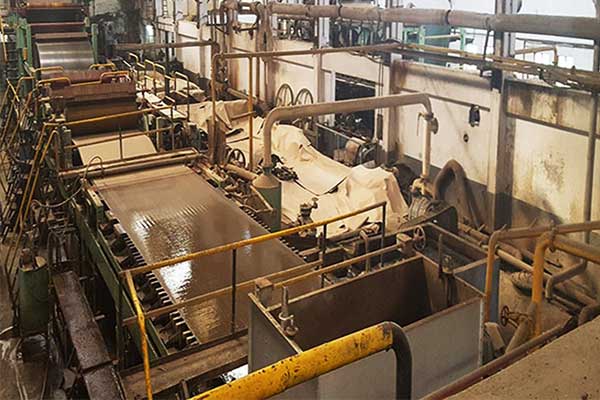
1. OCC Pulping System Design and Operation
OCC pulping is the first and most critical step in kraft liner production. The pulper must achieve complete fiber defibering while minimizing contaminant size reduction — smaller contaminants are exponentially harder to remove in downstream equipment.
Drum Pulper Technology: For a kraft liner line rated at 300-500 TPD, a drum pulper offers significant advantages over conventional batch pulpers. Key specifications include:
- Drum diameter: 3.0-4.2 meters, length: 12-18 meters
- Operating consistency: 15-18% in the high-consistency zone
- Rotation speed: 12-16 rpm
- Motor power: 200-400 kW depending on capacity
- Retention time: 20-30 minutes for complete defibering
- Perforated screening zone: 8-12 mm hole diameter
Drum pulpers achieve 85-92% defibering efficiency in a single pass while preserving contaminant integrity. Compared to high-consistency batch pulpers, drum pulpers reduce specific energy consumption by 15-25%, typically operating at 20-30 kWh/ton of OCC processed. The accepted stock passes through 8-12 mm extraction holes while large contaminants (plastic film, wet-strength paper, baling wire) are discharged at the drum end.
Detrashing and Secondary Pulping: Rejects from the drum pulper pass through a detrashing system (trommel screen or ragger) to recover entrained fiber. A secondary pulper (low-consistency, 3-4% operating consistency) processes partially defibered flakes from the primary screening stage, typically at 55-75 kW motor power with 20-30 minutes retention time.
2. High-Consistency Cleaning and Coarse Screening
Following pulping, the stock at approximately 3.5-4.5% consistency enters a multi-stage cleaning and screening system. The objective is to remove heavy contaminants, lightweight rejects, and oversized particles before refining.
High-Density Cleaner Configuration: A bank of HD cleaners rated at 450-600 L/min each operates with the following parameters:
- Inlet pressure: 2.0-3.0 bar
- Pressure drop: 1.0-1.8 bar
- Inlet consistency: 3.0-4.0%
- Reject rate: 8-12% of inlet flow (1st stage)
- Removal efficiency: >95% for particles >0.5 mm specific gravity >1.2
A three-stage cascade system (primary HD cleaners → secondary → tertiary) maximizes fiber recovery. The tertiary stage reject, representing approximately 1-2% of total inlet flow, is sent to sludge handling.
Coarse Pressure Screen (Hole Screen): Post-cleaning stock enters coarse pressure screens with basket hole diameters of 2.0-3.0 mm. Operating parameters:
- Inlet consistency: 2.5-3.5%
- Inlet pressure: 1.5-2.2 bar
- Rotor speed: 600-900 rpm
- Motor power: 75-132 kW
- Volumetric reject rate: 15-22%
- Accept consistency: 2.2-3.2%
These screens remove flat particles, plastic sheets, and large fiber bundles. Basket service life in OCC applications averages 2,500-3,500 hours. Operators should replace baskets when the differential pressure at the design flow exceeds 1.5 bar — indicating excessive blinding.
3. Fractionation and Refining for Linerboard Strength
Kraft linerboard refining focuses on developing burst strength (Mullen) and ring crush (RCT) — the two most critical quality parameters. An optimized fractionation and refining strategy separates long and short fiber fractions for independent treatment.
Pressure Screen Fractionation: A slotted pressure screen with basket slot widths of 0.20-0.30 mm separates the stock into long-fiber (reject) and short-fiber (accept) fractions at approximately 2.0-2.5% consistency. The long-fiber fraction, comprising 30-40% of total flow, contains fibers over 1.0 mm and is directed to high-intensity refining.
Long-Fiber Refiner Specifications:
- Disc diameter: 26-34 inches for a 300 TPD line
- Motor power: 315-500 kW at 1,480 rpm
- Refining consistency: 3.5-4.5%
- Specific edge load (SEL): 1.5-2.5 J/m (higher than tissue to maximize fiber bonding)
- Net refining energy: 80-120 kWh/ton of long fiber fraction
- Freeness target: 380-450 mL CSF for top liner; 420-500 mL CSF for base layer
Short-Fiber Treatment: The short-fiber fraction requires minimal refining — typically 20-40 kWh/ton at low SEL (0.5-0.8 J/m) — to improve fines retention without excessive cutting. Alternatively, many mills bypass refining entirely for the short-fiber accept, using it directly in the base ply.
Strength Development Targets: Proper refining should achieve:
- Burst index increase: 25-40% compared to unrefined stock
- Ring crush improvement: 15-25%
- Tensile index gain: 30-50%
- Freeness drop: 80-150 mL CSF
4. Energy Management and Cost Optimization
The stock preparation section of a kraft liner line consumes 80-140 kWh per ton of finished product, representing a significant operational cost. Understanding where energy is consumed enables targeted optimization.
Energy Distribution in Stock Preparation:
- Pulping (drum or batch pulper): 20-35 kWh/ton
- Cleaning (HD and forward cleaners): 8-12 kWh/ton
- Screening (coarse, fractionation, fine): 12-18 kWh/ton
- Refining (long fiber + short fiber): 35-65 kWh/ton
- Pumping and agitation: 8-12 kWh/ton
Optimization Strategies:
- Installing VFDs on pump motors above 30 kW reduces energy by 15-25%
- Optimizing refiner plate patterns for OCC fiber can reduce specific energy by 8-12% at equivalent freeness
- Implementing automatic refiner gap control (PLC-based) maintains optimal plate clearance, saving 5-8% energy compared to manual control
- Using medium-consistency pumps (8-12%) for inter-stage transfer reduces pumping energy by 25-30% compared to low-consistency pumping with subsequent thickening
For a 400 TPD kraft liner mill operating 340 days annually, a 10% reduction in stock preparation energy (from 110 to 99 kWh/ton) saves approximately 1,496,000 kWh per year — equivalent to $149,600 at $0.10/kWh.
5. Preventive Maintenance for OCC Processing Equipment
OCC processing subjects equipment to severe abrasive wear from contaminants (sand, grit, staples). A rigorous maintenance program is essential to prevent unexpected failures.
Daily Inspection:
- Record all pressure screen differential pressures — investigate any increase above 0.15 bar from baseline
- Monitor refiner motor load — a 10% drop at constant throughput suggests plate wear
- Check ragger and plastic removal system operation
- Inspect HD cleaner underflow for abnormal discharge patterns
Weekly Service:
- Clean pressure screen baskets — soaking in alkaline cleaning solution for 2-4 hours removes stickies buildup
- Inspect drum pulper screening plates for hole enlargement (accept maximum 1 mm over original diameter)
- Check refiner plate gap uniformity using feeler gauges at 4-6 positions
- Lubricate all bearings per manufacturer schedule
Monthly Maintenance:
- Replace worn HD cleaner ceramic cone tips — tip diameter wear exceeding 3 mm reduces efficiency
- Inspect pump wear rings — clearance exceeding 2x original specification requires replacement
- Ultrasonic thickness testing on all bend pipe sections (replacement threshold: 50% of original wall thickness)
- Calibrate all magnetic flow meters and consistency transmitters
Quarterly / 2,000-Hour Service:
- Replace pressure screen basket (OCC applications: 2,500-3,500 hour service life)
- Replace refiner plates (OCC: 600-900 hour service life due to abrasive contaminants)
- Overhaul all pump mechanical seals
- Inspect drum pulper drive chain/belt tension and sprocket wear
Annual Shutdown:
- Complete pulper drive overhaul including gearbox oil analysis and replacement
- Replace all rubber-lined pipe sections showing signs of wear
- Major pump overhaul including shaft runout check
- Full electrical testing (insulation resistance, winding resistance) on all main motors
- Replace all expansion joints and flexible connections
A well-engineered kraft liner paper making line with disciplined maintenance practices achieves machine availability above 92%, consistent product quality within ±5% of burst strength targets, and energy costs below industry benchmarks. The key is selecting equipment designed for OCC’s specific challenges and maintaining it on a schedule that prevents rather than reacts to failures.
Contact us at leizhanzhang@gmail.com | Zhengzhou Leizhan Technology Paper Machinery Co., Ltd.