
Kraft Liner Paper Making Line: Stock Preparation, Screening Technology & Production Optimization
Kraft linerboard serves as the structural backbone of corrugated packaging, demanding high burst strength, ring crush resistance, and consistent caliper across every meter of production. Modern kraft liner paper making lines process substantial volumes of old corrugated containers (OCC) and virgin fiber to produce grades ranging from 125 to 440 g/m² at machine speeds of 500-1,200 m/min. The integration of stock preparation equipment with the paper machine determines whether a mill achieves competitive production costs and consistent quality.
This article examines the critical equipment and process parameters that define high-performance kraft liner production, from wastepaper handling through finished rolls.
OCC Pulping and Stock Preparation for Kraft Liner Production
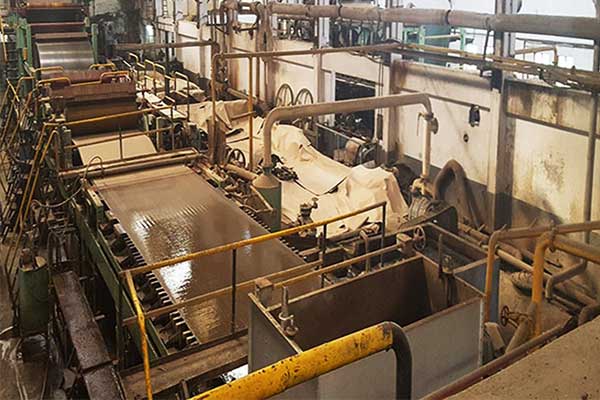
The stock preparation system begins with OCC handling, which presents unique challenges compared to virgin fiber processing. Modern OCC pulping systems operate at high consistency to maximize contaminant removal while minimizing fiber damage.
Drum Pulping Technology: Continuous drum pulpers rated at 400-1,200 TPD process bales of OCC at 14-18% consistency. The gentle mechanical action in the pulping zone (first 60-70% of drum length) preserves fiber length while disintegrating the sheet structure. The screening zone (remaining drum length) employs 8-12 mm perforations that allow defibered stock to pass while retaining plastic straps, wet-strength materials, and large contaminants for discharge. Pulping energy consumption ranges from 15-22 kWh per ton of OCC processed.
High-Density Cleaning: Following the pulper, high-density cleaners (HD cleaners) operating at 3-4% consistency remove heavy contaminants — stones, metal, glass, and sand — that would damage downstream equipment. These hydrocyclone-type cleaners generate centrifugal forces exceeding 200 G, with heavy reject rates typically 0.3-0.8% of throughput. Accept stock proceeds to coarse screening while rejects undergo secondary cleaning to recover trapped fiber.
Coarse Screening: Hole screens with 2.0-3.5 mm basket perforations handle stock at 2.5-3.5% consistency. Vertical screen designs with rotor speeds of 400-600 rpm on the basket surface prevent fiber stapling and maintain stable throughput. The coarse screening stage removes flat plastic, hot-melt adhesives, and fiber bundles that passed through the pulper extraction plate. Reject rates of 2-5% proceed to a tailing screen for fiber recovery before final disposal.
Fractionation (Optional): Some kraft liner mills employ fiber fractionation using pressure screens with 0.15-0.25 mm slots. The long-fiber fraction (retained on slots) provides the strength layer for multi-ply forming, while the short-fiber fraction enriches the filler and back plies. This approach allows mills to optimize fiber utilization, directing high-quality long fiber where it delivers the most value.
Fine Screening and Low-Density Cleaning Systems
After coarse screening, stock dilution to 0.8-1.2% consistency prepares it for fine screening — the most critical contaminant removal stage in the kraft liner paper making line.
Fine Pressure Screens: Modern fine screens for kraft liner utilize baskets with 0.20-0.35 mm slots arranged in either wedge-wire or milled-slot configurations. Operating parameters include:
- Slot velocity: 1.2-2.0 m/s through the basket openings
- Rotor speed: 8-14 m/s peripheral speed creating pressure pulses of 30-60 kPa
- Reject rate: 10-20% of feed flow for single-stage, cascaded through two to three additional stages
- Motor power: 75-250 kW depending on throughput (200-800 TPD)
Fine screening efficiency directly impacts paper machine cleanliness. A well-operating fine screen system should reduce stickies count by 85-95% and remove 70-85% of residual ink particles. Mills that consistently achieve these removal rates report 60-80% fewer wet-end breaks and significantly reduced doctor blade change frequency on dryer cylinders.
Low-Density Cleaning: Forward cleaners (centri-cleaners) operating at 0.5-0.8% inlet consistency form the next stage. These hydrocyclones — typically 75-150 mm in diameter for liner applications — separate particles based on specific gravity differences. Operating pressure drops range from 140-210 kPa across the cleaner, with reject rates of 8-12% per stage. Three to four stages in cascade configuration recover fiber while concentrating rejects in the final stage for disposal.
The combined screening and cleaning system should reduce dirt count to below 20 mm²/m² (TAPPI T563) for standard liner grades and below 10 mm²/m² for high-performance applications. Reaching these targets consistently requires careful attention to basket condition, cleaner cone wear, and system pressure balance.
Refining Strategy and Energy Management for Kraft Liner
Refining represents the single largest electrical load in the stock preparation system and the primary means of developing sheet strength properties. An optimized refining strategy balances strength development against energy consumption and drainage impact.
Disc Refiner Specifications for Liner Applications:
- Disc diameter: 660-1,050 mm (26-42 inches)
- Motor power: 315-900 kW per refiner
- Plate pattern: Fine-barred for long fiber, medium-barred for short fiber fraction
- Operating consistency: 3.5-5.0%
- Specific edge load: 1.5-3.0 W·s/m for OCC fiber
Energy Targets by Grade:
- Standard kraft liner (125-200 g/m²): 80-140 kWh/ton net refining energy
- High-performance liner (200-300 g/m²): 100-170 kWh/ton
- Heavy-duty liner (300-440 g/m²): 70-120 kWh/ton (lower because basis weight contributes burst strength)
Refining Optimization Tactics:
Refining intensity — the energy applied per meter of bar crossing — significantly influences the result at a given net energy input. Lower intensity (more bars, finer pattern) develops tensile and burst strength more efficiently with less cutting. Higher intensity promotes drainage and reduces refining time but cuts fiber length. For OCC-based liner, medium-low intensity (1.5-2.5 W·s/m) generally delivers the best balance of strength development and drainage preservation.
Plate material selection affects both performance and maintenance cost. Stainless steel plates (17-4 PH or equivalent) provide 800-1,500 hours of service life in OCC applications. Chrome-alloy plates can extend this to 2,000-3,500 hours but at higher initial cost. Mills should calculate cost per operating hour rather than purchase price when comparing alternatives.
Paper Machine Configuration and Key Performance Parameters
The paper machine for kraft liner must handle heavy basis weights, high drainage loads, and demanding strength specifications. Key design features include:
Headbox Design: Hydraulic headboxes for liner typically feature slice openings of 12-25 mm and deliver jet velocities matched to wire speed within ±1%. Consistency at the headbox ranges from 0.5-1.0% depending on basis weight. Multi-ply headboxes allow mills to produce linerboard with different fiber compositions in each layer — strong virgin or long-fiber top and bottom layers with recycled fiber in the middle plies — optimizing material cost while meeting strength specifications.
Forming Section: Fourdrinier or hybrid formers dominate kraft liner production. The forming table length depends on machine speed and basis weight, typically 12-25 m for machines running 500-900 m/min. Drainage elements include forming boards, foils (0-3° attack angle progressing along table), and vacuum-augmented units (low-vac boxes at 5-15 kPa, high-vac boxes at 25-45 kPa). Sheet dryness at the couch roll should reach 16-20% for efficient press section operation.
Press Section Configuration: Modern liner machines employ shoe presses in the first or second press position. Shoe press linear loads of 800-1,200 kN/m achieve post-press dryness of 48-55%, compared to 42-46% from conventional roll presses. Each percentage point increase in post-press dryness reduces dryer section steam consumption by approximately 3-4% — a substantial impact on a machine consuming 1.8-2.4 tons of steam per ton of production.
Dryer Section: Conventional multi-cylinder dryer sections with 1,500-1,800 mm diameter cylinders dominate kraft liner production. Steam pressures progress from 0.15-0.35 MPa in the first groups to 0.4-0.7 MPa in later groups. Pocket ventilation systems and dryer fabrics designed for high permeability (800-1,500 CFM) improve drying uniformity and rate. Specific drying rates for linerboard range from 18-28 kg water evaporated per square meter per hour.
Maintenance Schedules and Operational Reliability
Maintaining consistent production on a kraft liner paper making line requires structured maintenance across all equipment areas. The following schedule addresses the most critical components:
Daily Monitoring:
- Pressure screen differential pressure — trending upward signals basket blinding; chemical cleaning required when ΔP exceeds 25-30 kPa above clean-basket baseline
- Cleaner pressure drop consistency across all cones in a bank (variation over 10% indicates plugged or worn cones)
- Refiner motor load — gradual increase may indicate plate wear requiring gap adjustment
- Machine clothing condition — felt moisture profile, fabric wear streaks
Weekly Inspections:
- Refiner plate gap measurement and plate bar edge condition assessment
- Screen basket surface inspection for mechanical damage or abnormal wear patterns
- Vacuum pump performance verification — seal water temperature below 40°C, vacuum levels within specification
- Reject system conveyor and compactor functionality
Monthly Maintenance:
- Complete cleaner system cone inspection — replace cones with wear exceeding 0.5 mm on internal diameter
- Screen rotor and bearing inspection — vibration analysis trending
- Refiner plate change based on operating hours and performance data
- HD cleaner vortex finder and apex inspection
Annual Shutdown (7-14 days):
- Complete screen basket replacement or refurbishment
- Refiner main bearing replacement (typically at 15,000-25,000 operating hours)
- Headbox disassembly, cleaning, and lip adjustment
- Dryer cylinder internal inspection, siphon clearance verification
- Press roll recovering and grinding
- Drive coupling and gearbox inspection
Effective maintenance programs reduce unscheduled downtime to below 2% of available operating time. Mills that achieve this benchmark typically invest 3-5% of equipment replacement value annually in maintenance activities.
Conclusion
A high-performance kraft liner paper making line integrates robust OCC handling, thorough contaminant removal, efficient refining, and a properly configured paper machine. The interaction between these systems — not any single component — determines line performance. Mills that invest in understanding their specific fiber characteristics, contaminant loads, and product quality requirements make better equipment decisions that compound into years of competitive advantage.
Contact us at leizhanzhang@gmail.com to discuss your kraft liner production requirements and explore equipment solutions matched to your specific operating conditions.
Zhengzhou Leizhan Technology Paper Machinery Co., Ltd.