
Kraft Liner Paper Making Line: Complete Equipment Guide and Technical Specifications
Overview of Kraft Liner Paper Production
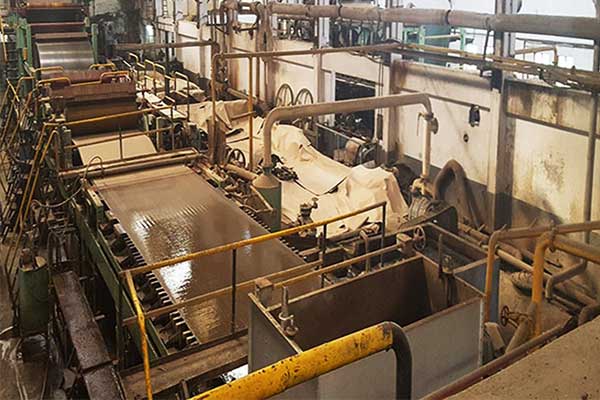
Kraft linerboard is the primary raw material for corrugated packaging. It demands high burst strength, ring crush resistance, and consistent caliper. A well-engineered kraft liner paper making line must balance fiber treatment intensity, formation uniformity, and pressing efficiency to meet these physical requirements while controlling production costs.
Leizhan Technology supplies complete kraft liner production lines with capacities from 100 TPD to 500 TPD, covering both virgin kraft pulp and recycled fiber (OCC) based operations. This guide covers every major equipment group with real technical parameters that matter for production planning and line evaluation.
Pulping and Stock Preparation for Kraft Liner
Kraft liner production starts with either virgin unbleached kraft pulp or old corrugated containers (OCC). The pulping system configuration differs significantly between these two raw material streams.
For OCC-Based Lines:
- Drum Pulper — Capacity 200–600 TPD, consistency 14–18%, drum diameter 3.0–4.0 m, drum length 10–18 m, motor 160–400 kW. The gentle pulping action preserves fiber length for strength while removing large contaminants through the perforated screening zone.
- D-Type Hydrapulper — For medium-sized lines (100–250 TPD), consistency 4–6%, vat volume 15–40 m³, rotor diameter 900–1650 mm, motor 75–250 kW.
- Ragger and Junk Tower — Continuous removal of baling wire, plastic straps, and heavy contaminants during pulping.
For Virgin Kraft Pulp Lines:
- High-Consistency Hydrapulper — Processes unbleached kraft pulp bales at 10–15% consistency, rotor peripheral speed 15–18 m/s.
- Deflaker — Post-pulping fiber flake reduction, motor 55–160 kW, disc diameter 450–600 mm, throughput 50–200 TPD.
Screening System for Kraft Liner Grades
Kraft linerboard stocks typically contain higher contaminant loads than other paper grades. The screening system must remove stickies, hot melts, polystyrene, wet-strength paper fragments, and abrasive particles that reduce sheet strength and cause machine clothing damage.
Multi-Stage Screening Configuration:
- Stage 1 — High-Density Cleaner: Removes heavy particles at 3–4% consistency. Multiple cones arranged in canister. Accept pressure 0.20–0.30 MPa. Reject rate 8–15%.
- Stage 2 — Medium-Consistency Pressure Screen (Coarse): Hole basket 2.0–3.5 mm, consistency 2.5–3.5%, motor 37–90 kW. Screening efficiency >85% for stickies >1 mm².
- Stage 3 — Low-Consistency Pressure Screen (Fine): Slot basket 0.20–0.35 mm, consistency 0.8–1.5%, motor 45–132 kW. This is the last protective screen before the paper machine.
- Stage 4 — Forward Cleaners (Lightweight): 3–5 stage cascade, 100–250 cones per bank, pressure drop 0.12–0.18 MPa per stage, rejects lightweight contaminants (polyethylene, wax).
Rejects from each screening stage are re-screened in secondary or tertiary stages to maximize fiber recovery. Overall fiber recovery rate exceeds 96% in a properly designed system.
Refining Technology for Linerboard Strength Development
Refining is where kraft linerboard develops its strength. Unlike printing and writing grades where refining targets formation and opacity, linerboard refining prioritizes burst, ring crush (RCT), and concora medium test (CMT) values.
Leizhan Refiner Options for Kraft Liner:
| Refiner Type | Disc Diameter | Motor Power | Throughput | Best For |
|---|---|---|---|---|
| Double Disc Refiner DDR-500 | 500 mm | 110–160 kW | 60–100 TPD | OCC liner, 100–200 TPD mills |
| Double Disc Refiner DDR-660 | 660 mm | 250–400 kW | 150–300 TPD | Virgin kraft liner, high freeness drop |
| Conical Refiner JC-04 | Cone length 1200 mm | 200–315 kW | 120–250 TPD | Post-refining, fibrillation |
Typical Refining Targets for Kraft Liner (OCC-based):
- Inlet freeness: 480–550 CSF
- Outlet freeness: 380–420 CSF
- Freeness drop: 80–130 CSF
- Specific energy consumption: 60–110 kWh/ton
- Optimal specific edge load (SEL): 1.5–2.5 W·s/m
Energy optimization in refining can yield significant savings. A 15% reduction in refining power on a 300 TPD line saves approximately $45,000–65,000 annually in electricity costs, assuming $0.08–0.12/kWh.
Paper Machine Configuration for Kraft Linerboard
The paper machine for kraft linerboard must handle heavier basis weights (typically 125–440 g/m²) with excellent formation and ply bond. Fourdrinier configurations with secondary headboxes (for two-ply or three-ply forming) are standard.
Key Machine Parameters (Leizhan Design Range):
- Wire Width: 3200–5600 mm (trim width 2800–5000 mm)
- Operating Speed: 150–500 m/min (varies with basis weight)
- Basis Weight Range: 100–440 g/m²
- Headbox: Hydraulic type, slice opening 12–20 mm, consistency 0.5–1.0%, jet-to-wire ratio 0.97–1.03
- Forming Section: Fourdrinier table with 12–20 dewatering elements (foils, wet boxes, vacuum boxes). Vacuum range: low 5–15 kPa, high 25–45 kPa.
- Press Section: 2–3 nips (suction pick-up + double-felted press + smoothing press). Nip load 80–180 kN/m. After-press dryness 44–50%.
- Dryer Section: 30–55 cylinders (diameter 1500–1800 mm), steam pressure 0.3–0.6 MPa (grouped: MP, LP).
- Size Press / Film Press: Surface starch application 1.5–4 g/m² per side for improved surface strength. Pond or metering size press.
- Reel: Drum reel or Pope reel, max reel diameter 2200–3000 mm.
Energy Benchmarks for Kraft Liner Production:
- Total electricity: 400–600 kWh/ton (includes stock prep + paper machine)
- Steam consumption: 1.6–2.2 tons steam/ton paper
- Water consumption: 8–15 m³/ton (closed/tight white water system)
Maintenance and Spare Parts Planning
Kraft liner machines run heavier loads than other grades, accelerating wear on mechanical components. A structured maintenance program is essential for reliable operation.
| Interval | Component | Action | Expected Lifetime |
|---|---|---|---|
| Daily | Doctor blades (all positions) | Visual inspection, replace if chipped | 8–24 hours |
| Weekly | Refiner plates | Check wear pattern, measure groove depth | 800–2500 hours |
| Monthly | Screen baskets | Remove, clean, inspect for slot deformation | 8–14 months |
| Quarterly | Press rolls | Check rubber cover hardness (P&J 8–25), regrind if needed | 3–5 years (cover) |
| Semi-Annual | Dryer bearings | Grease analysis, ultrasonic inspection | 5–10 years |
| Annual | Full shutdown | Gearbox oil change, drive coupling alignment, dryer syphon inspection, felt roll bearing replacement, headbox slice lip inspection | — |
A well-stocked spare parts inventory should include: forming fabrics (2–3 sets), press felts (2–3 sets), doctor blades (3-month supply), refiner plates (1–2 sets), screen baskets (1 spare set), pump mechanical seals, and critical bearings.
Contact us at leizhanzhang@gmail.com | Zhengzhou Leizhan Technology Paper Machinery Co., Ltd.