
Kraft Liner Paper Machine Technical Guide: Specifications and Production Efficiency
Kraft linerboard is the backbone of the corrugated packaging industry, providing the strength and durability required for shipping containers that protect goods throughout global supply chains. Manufacturing kraft linerboard demands robust paper machine designs capable of handling high basis weights, producing excellent strength properties, and operating reliably under demanding production schedules. As the packaging market continues to grow — driven by e-commerce expansion and the shift away from plastic packaging — kraft liner producers are investing in equipment upgrades and new capacity. This technical guide examines the specifications, energy benchmarks, and maintenance practices that define efficient kraft liner production.
Kraft Liner Production Process Overview
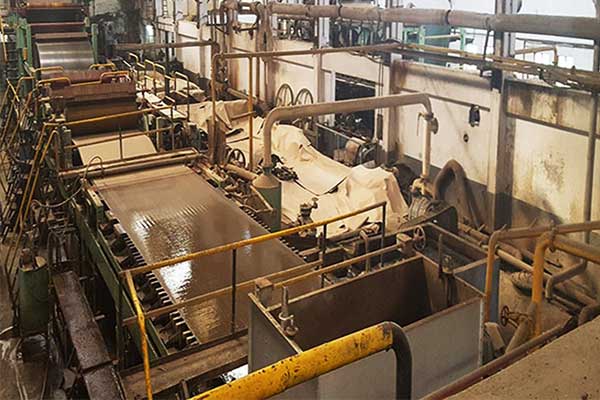
The production of kraft linerboard begins with the pulping of softwood chips through the kraft cooking process, which uses a mixture of sodium hydroxide and sodium sulfide to dissolve lignin and release cellulose fibers. The resulting unbleached kraft pulp exhibits the long-fiber characteristics essential for high tear strength and bursting resistance. After washing and screening, the pulp undergoes refining to develop fiber bonding properties while preserving fiber length — a balance that directly determines the final board’s strength-to-weight ratio.
The paper machine for kraft liner production is typically a multi-Fourdrinier configuration or a single Fourdrinier with secondary headboxes for multi-ply forming. Multi-ply construction allows mills to use different fiber furnishes in different layers: high-quality virgin kraft in the top and bottom plies for strength and printability, with lower-cost recycled fiber or higher-yield pulp in the middle ply. The forming section operates at headbox consistencies of 0.3% to 0.8%, with slice openings adjusted according to the target basis weight. For basis weights ranging from 125 gsm to 440 gsm, the forming table length is designed to provide adequate drainage time while maintaining fiber orientation control.
After forming, the wet web passes through a press section that typically includes two or three press nips. Double-felted presses with suction pick-up rolls achieve sheet dryness of 42-48% entering the dryer section. The press section design significantly influences the final sheet density and surface properties. Modern shoe presses can achieve higher dryness levels and improved sheet smoothness compared to conventional roll presses. The dryer section for kraft liner machines is extensive, often containing 40-80 dryer cylinders arranged in multiple drive groups with tension control between sections. Size press application of starch solution at 4-8% solids enhances the surface strength and reduces linting tendency of the finished board.
Technical Parameters for Kraft Liner Machines
Kraft linerboard machines are characterized by robust construction, high drive power, and large drying capacity. The following technical parameters represent the key specifications that purchasers and operators should evaluate when considering kraft liner production equipment.
Machine Width and Production Capacity: Kraft liner machines range from 2.8 meters to 7.0 meters in trim width, with production capacities spanning 150 TPD for smaller machines to over 900 TPD for large-scale installations. A typical 4.2-meter machine running at 550 m/min on 200 gsm kraft linerboard produces approximately 350 tonnes per day. The same machine on 150 gsm lightweight liner at 650 m/min achieves around 380 TPD. Basis weight flexibility — the ability to produce grades from 100 gsm to 440 gsm on the same machine — is a critical specification for mills serving diverse packaging markets.
Drive System Requirements: The main drive motors for a kraft liner machine are substantial. For a 4.2-meter machine, the total installed drive power typically ranges from 2,500 kW to 4,500 kW, distributed across the wire section (300-500 kW), press section (400-700 kW), dryer sections (1,500-2,800 kW), size press (150-300 kW), and reel (100-200 kW). DC drives with digital speed regulation maintain section-to-section draw accuracy within 0.1%, essential for controlling sheet tension and preventing breaks on the open draws between sections.
Forming Section Design: Multi-ply forming on kraft liner machines requires secondary headboxes that apply additional fiber layers onto the partially dewatered base sheet. The primary headbox is typically a hydraulic design with consistency profiling, while secondary headboxes are air-padded designs capable of delivering stock at 0.3-0.6% consistency. Forming board, foil, and vacuum box configurations are engineered to provide controlled drainage rates that optimize fiber orientation for strength development. Table rolls and dandy rolls contribute to sheet consolidation and surface finish improvement.
Dryer Section Configuration: Based on a drying rate of 15-25 kg of water evaporated per square meter per hour, a kraft liner machine requires 1.5-2.0 square meters of dryer surface per tonne of daily production. Steam pressures in the dryer cylinders range from 0.2 MPa in the early dryer groups (where the wet sheet is prone to blistering) to 0.6 MPa in the final groups. Condensate removal systems must be carefully designed to prevent flooding at high machine speeds. A fully enclosed hood with heat recovery captures exhaust air for use in process water heating and combustion air preheating.
Energy Management in Kraft Liner Production
Kraft linerboard production is energy-intensive, with total energy consumption ranging from 550 to 800 kWh equivalent per tonne of finished product when both electrical and thermal energy are accounted for. Effective energy management directly impacts mill competitiveness, especially in regions with high energy costs.
Electrical Energy Distribution: In a typical kraft liner mill, the stock preparation department consumes 180-260 kWh/tonne, with the largest loads being refiners (120-180 kWh/tonne), pumps, and screening equipment. The paper machine electrical consumption is 280-400 kWh/tonne, with the vacuum system representing 25-35% of machine electrical load, dryer section drives 20-25%, and fan pumps for the approach system 15-20%. Refiner optimization — operating at the correct plate gap and consistency to achieve target freeness with minimum energy input — can reduce stock preparation energy by 10-20% compared to suboptimal operation.
Steam and Thermal Energy: Steam consumption for the dryer section ranges from 1.6 to 2.2 tonnes per tonne of paper, with the variation driven by press section efficiency, dryer surface condition, and hood system design. Mills that invest in high-efficiency press sections achieving 46-48% dryness entering the dryers reduce steam demand by 8-12% compared to lines achieving only 42% post-press dryness. Steam condensate return systems that recover and reuse condensate as boiler feedwater reduce both water treatment costs and energy losses. A well-designed condensate system achieves 85-92% return rates.
Integrated Energy Strategies: Modern kraft liner mills increasingly adopt integrated energy strategies. Variable speed drives on large motors — particularly fan pumps and induced draft fans — reduce energy consumption during partial-load operation. Heat recovery from the dryer hood exhaust, which exits at 70-90°C and high humidity, can provide building heating and process water preheating. Some mills install back-pressure steam turbines that generate electricity while supplying process steam to the dryers, achieving overall energy utilization efficiencies exceeding 70%.
Maintenance Best Practices for Long-Run Efficiency
Kraft liner machines operate in demanding conditions: high moisture, elevated temperatures, chemical exposure from wet-end additives, and mechanical stresses from high nip loads and web tensions. A rigorous maintenance program is essential for achieving the 90-95% machine availability rates expected in competitive linerboard mills.
Press Section Maintenance: The press section requires particular attention due to the high nip loads — typically 80-120 kN/m for conventional presses and 800-1,200 kN/m for shoe presses — that accelerate roll cover wear and bearing fatigue. Press roll covers should undergo hardness and profile measurement every three months, with grinding or replacement when hardness drops below specification or profile deviation exceeds 0.05 mm. Suction press roll shells require ultrasonic thickness testing every six months to detect internal corrosion before shell failure occurs. Felt conditioning systems — including high-pressure needle showers operating at 2.0-3.0 MPa and uhle boxes — need weekly inspection for nozzle clogging and vacuum slot wear.
Dryer Section Maintenance: Dryer cylinder syphons and rotary joints are high-wear components that require quarterly inspection. Failed syphons cause condensate flooding, which reduces heat transfer and can cause dryer drive overload. Dryer bearing temperatures should be continuously monitored with automatic alarms, and grease replenishment intervals followed precisely — typically every 500-1,000 operating hours depending on bearing size and operating temperature. Dryer fabric (canvas) tension must be checked weekly; inadequate tension causes fabric slippage that accelerates wear and reduces drying efficiency. Dryer surface temperatures should be profiled monthly using infrared thermography to detect siphoning problems early.
Planned Shutdown Management: Kraft liner mills typically schedule a 12-24 hour maintenance shutdown every 4-6 weeks for fabric changes, roll grinding, and minor repairs. Annual shutdowns of 5-7 days allow for major overhauls: refiner plate replacement, complete drive alignment, dryer syphon replacement, press roll bearing inspection, and comprehensive electrical testing. Planning these shutdowns with detailed work scopes, pre-staged spare parts, and contractor coordination maximizes the productive work completed during each outage window.
Selecting the Right Equipment Configuration
Equipment selection for a kraft linerboard machine involves detailed evaluation of furnish characteristics, product specifications, site conditions, and return-on-investment projections. Mill owners should work with experienced equipment suppliers — such as Zhengzhou Leizhan Technology — who can provide complete process guarantees and technical support.
Stock Preparation Capacity: The stock preparation system must be sized to supply the paper machine with 5-10% excess capacity to accommodate grade changes and production peaks. For a 350 TPD machine, a stock prep system rated at 380-400 TPD ensures the machine never waits for stock. Refiner capacity is particularly critical; undersized refiners force operators to run at wider plate gaps, compromising strength development. Leizhan Technology’s double-disc refiners are engineered with precise plate adjustment mechanisms and energy-efficient designs that deliver the fiber treatment needed for premium kraft liner grades.
Supplier Technical Support: When investing in kraft liner equipment, the supplier’s technical support infrastructure is as important as the equipment specifications. Zhengzhou Leizhan Technology offers complete project support from process design through installation, commissioning, and ongoing optimization. The company maintains an engineering team that assists customers with production troubleshooting, quality improvement programs, and energy reduction initiatives throughout the equipment lifecycle.
Contact us at leizhanzhang@gmail.com | Zhengzhou Leizhan Technology Paper Machinery Co., Ltd.