
Cultural Paper Production Line: Complete Equipment and Process Parameters
Introduction to Cultural Paper Manufacturing
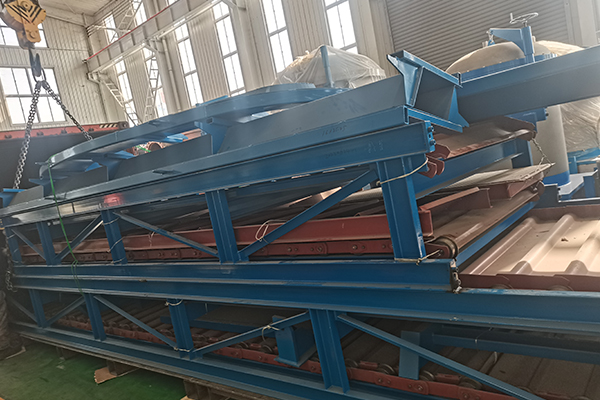
Cultural paper — encompassing printing and writing grades such as copy paper, offset paper, and notebook paper — requires exceptional formation quality, surface smoothness, opacity, and dimensional stability. A cultural paper production line integrates advanced stock preparation, precision refining, thorough cleaning, and a paper machine engineered for high-speed, lightweight sheet production.
Leizhan Technology provides complete cultural paper lines from 50 TPD to 300 TPD, serving mills producing photocopy paper, exercise book paper, offset printing paper, and lightweight coated (LWC) grades. This article details the equipment configuration, technical parameters, and operational best practices that define a high-performance cultural paper line.
Raw Material Handling and Pulping System
Cultural paper grades predominantly use bleached chemical pulp — either bleached hardwood kraft (BHKP) for bulk and opacity, bleached softwood kraft (BSKP) for strength, or a blend of both. Some mills also incorporate deinked pulp (DIP) from recovered office paper.
Pulping Equipment for Bleached Pulp Bales:
- Low-Consistency Hydrapulper — Consistency 4–6%, vat volume 10–30 m³, rotor speed 200–300 rpm, motor power 55–200 kW. Designed for gentle defibering to preserve fiber length. Extraction plate hole size 6–12 mm.
- Bale Conveyor and Dewiring Station — Automatic or semi-automatic bale wire removal before pulper feeding.
- Dump Chest with Agitator — Volume 20–60 m³, consistency 3–4%, side-mounted or top-entry agitator (7.5–22 kW).
For mills using deinked pulp, additional equipment includes flotation cells, dispersers, and washing stages to achieve brightness targets of 80–92% ISO.
Screening and Cleaning for High-Quality Cultural Paper
Cultural paper grades demand extremely low dirt count. Even minute contaminants — shives, stickies, ink specks — become visible defects on the final sheet. The screening and cleaning system must achieve 98–99.5% contaminant removal efficiency.
Multi-Stage Cleaning and Screening Configuration:
- High-Density Cleaners — Remove sand, metal particles, and heavy debris at 2.5–3.5% consistency. Pressure drop: 0.03–0.06 MPa. Cone diameter: 150–300 mm.
- Medium-Consistency Pressure Screen — Hole basket 2.0–2.5 mm, consistency 2.0–3.0%, motor 22–55 kW. Removes shives and fiber bundles.
- Low-Consistency Pressure Screen (Fine) — Slot basket 0.12–0.20 mm, consistency 0.6–1.0%, motor 30–75 kW. Critical for speck-free sheet quality.
- Forward Cleaners (Multi-Stage) — 3–4 stage cascade, cone diameter 75–150 mm, pressure drop 0.14–0.20 MPa. Removes low-density contaminants (plastics, hot melts). Accept consistency 0.5–0.8%.
- Deaerator / Deculator — Removes entrained air to improve formation and reduce pinholes. Operating vacuum 20–40 kPa.
System design should include a fiber recovery unit on the last stage of forward cleaners to capture usable long fiber, returning it upstream to the accepts stream.
Refining System for Printing and Writing Papers
Refining for cultural paper targets fiber fibrillation and cutting to achieve specific freeness levels for each grade. The degree of refining directly influences sheet density, smoothness, strength, opacity, and printability.
| Paper Grade | Furnish | Target Freeness (CSF) | Refining Energy (kWh/ton) |
|---|---|---|---|
| Photocopy Paper (80 g/m²) | 70% BHKP / 30% BSKP | 350–420 | 80–130 |
| Offset Printing Paper | 60% BHKP / 40% BSKP | 320–380 | 100–160 |
| Lightweight Coated (LWC) | 50% mechanical / 50% kraft | 80–150 (mechanical), 350–420 (kraft) | 60–90 (kraft only) |
| Notebook / Exercise Book | 80% BHKP / 20% BSKP | 380–450 | 70–110 |
Leizhan Refiner Configurations for Cultural Paper:
- Double Disc Refiner DDR-400 — Disc diameter 400 mm, motor 75–110 kW, throughput 30–60 TPD. Ideal for small/medium mills producing copy paper or offset grades.
- Double Disc Refiner DDR-500 — Disc diameter 500 mm, motor 132–200 kW, throughput 60–120 TPD. Suitable for 100–200 TPD cultural paper lines.
- Conical Refiner JC-03 — Cone filling length 850 mm, motor 90–132 kW. Used for light post-refining to improve formation without excessive cutting.
Refining consistency for cultural grades is typically 3.5–5.0%. Bar width (1.0–2.5 mm) and groove width (2.0–3.5 mm) on refiner plates are selected based on the desired cutting-to-fibrillation ratio.
Paper Machine Specifications for Cultural Grades
Cultural paper machines run at medium to high speeds with precision formation and surface finish requirements. A typical configuration includes a hydraulic headbox, Fourdrinier or hybrid former, multi-nip press section, and a multi-cylinder dryer section with size press.
Machine Parameters (Leizhan Design):
- Wire Width: 2400–4200 mm
- Operating Speed: 200–700 m/min
- Basis Weight: 50–120 g/m² (uncoated), up to 90 g/m² (pre-coated)
- Headbox: Hydraulic, consistency 0.4–0.8%, turbulence generator with tube bank, slice lip micro-adjustment (0.01 mm resolution)
- Forming Section: Fourdrinier with 8–16 drainage elements. Hybrid former option with top wire for improved formation and reduced two-sidedness.
- Press Section: 2–3 nips (pick-up + shoe press + smoothing press). Nip load: 200–1000 kN/m (shoe press). After-press dryness 46–52%.
- Dryer Section: 20–40 cylinders × 1500 mm diameter, arranged in drive groups with tension control. Steam pressure 0.2–0.5 MPa.
- Size Press: Film or pond type, starch pickup 2–4 g/m² per side, solids 6–12%.
- Calender: 2–4 rolls, hard nip, line load 60–150 kN/m. Target smoothness (Bekk): 30–60 seconds for uncoated grades.
- Reel: Max diameter 2200–2800 mm, constant tension control ±2%.
Energy Consumption:
- Electricity: 480–650 kWh/ton (stock preparation + paper machine)
- Steam: 1.7–2.3 tons steam/ton paper
- Water: 10–18 m³/ton
Operational Maintenance for Cultural Paper Lines
Cultural paper machines are sensitive to cleanliness and precision. Even minor deviations in headbox slice opening or press felt conditioning can produce visible sheet defects.
| Frequency | Maintenance Activity | Details |
|---|---|---|
| Daily | Doctor blade check; felt/wire visual inspection; vacuum system check | Replace chipped blades immediately; check felt moisture profile |
| Weekly | Refiner plate gap check; screen basket ΔP logging; calender roll surface inspection | ΔP increase >15% from baseline = basket needs cleaning |
| Monthly | Headbox slice lip inspection; bearing vibration analysis; size press roll hardness check | Slice lip straightness ±0.02 mm; vibration ≤ 4.5 mm/s RMS |
| Quarterly | Press roll cover inspection; refiner plate replacement assessment; felt conditioning system audit | Roll cover P&J hardness drift >3 points = regrind/replace |
| Annual | Major shutdown — dryer bearing inspection, gearbox oil analysis, headbox internal cleaning, control loop tuning, frame alignment check | Gearbox oil TAN number check; machine frame laser alignment |
Spare parts to keep in inventory: forming fabrics (2–3 sets), press felts (2–3 sets), doctor blades (6-month supply), refiner plates (1–2 sets), screen baskets (1 set), calender roll bearings, pump seals, and critical drive belts.
Contact us at leizhanzhang@gmail.com | Zhengzhou Leizhan Technology Paper Machinery Co., Ltd.