
Cultural Paper Making Line: Advanced Stock Preparation, Bleaching & Quality Control Systems
Cultural paper — encompassing printing and writing grades, copy paper, offset paper, and specialty fine papers — demands the highest standards of brightness, cleanliness, formation, and surface properties among all paper grades. A cultural paper making line must remove contaminants to levels measured in parts per million while preserving fiber properties essential for sheet strength, opacity, and printability. The stock preparation system significantly influences finished product quality, often accounting for 60-70% of the quality variation observed in final sheet properties.
This article provides a detailed technical examination of cultural paper manufacturing, focusing on deinked pulp preparation, advanced screening, bleaching technology, and the paper machine configurations that deliver world-class printing and writing grades.
Deinked Pulp Preparation for Cultural Paper Grades
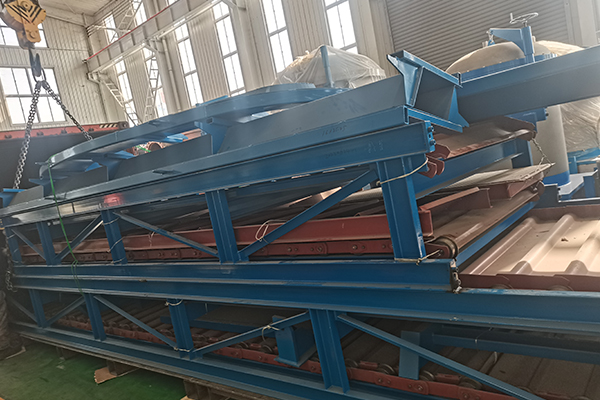
Many cultural paper mills utilize deinked pulp (DIP) as a cost-effective fiber source, either as the primary furnish or blended with virgin fiber. The deinking process must remove ink, toner, stickies, and other contaminants while preserving fiber length and brightness potential.
High-Consistency Pulping: Recovered paper — typically sorted office waste, printed papers, and magazine grades — enters the process through drum or high-consistency batch pulpers operating at 14-18% consistency. The pulping stage incorporates deinking chemicals: sodium hydroxide (0.5-1.5% on fiber) for fiber swelling and ink release, sodium silicate (1-3%) for peroxide stabilization and ink dispersion, hydrogen peroxide (0.5-2%) for bleaching, and surfactants (0.1-0.5%) for ink collection and removal. Pulping temperature ranges from 45-60°C with retention times of 15-30 minutes.
Coarse Screening Following Pulping: After dilution to 3-4% consistency, hole screens with 1.6-2.5 mm perforations remove coarse contaminants — plastic film, wet-strength paper, adhesive lumps — that survived the pulper. These screens operate with reject rates of 3-8%, with rejects cascaded through secondary and tertiary stages for fiber recovery. Accept stock proceeds to flotation or washing deinking stages.
Flotation Deinking: Flotation cells arranged in primary and secondary stages inject air bubbles (0.5-1.5 mm diameter) that collect hydrophobic ink particles and carry them to the surface for removal as foam. Operating parameters include:
- Stock consistency: 0.8-1.2%
- Air-to-stock ratio: 0.3-0.6 (volume basis)
- Retention time: 8-15 minutes per stage
- Reject rate: 15-25% per stage, concentrated through secondary flotation
Well-operated flotation systems remove 85-95% of ink particles in the 10-150 μm size range. Ink particles smaller than 5 μm and larger than 200 μm are less effectively removed, requiring complementary washing or screening stages.
Washing Stages: Wash deinking employs multi-stage washers (disc filters, double-nip thickeners, or screw presses) operating with dilution factors of 6-10 m³ of wash water per ton of pulp. Washing excels at removing very fine ink particles (under 10 μm), fillers, and dissolved colloidal material that flotation cannot capture. Modern deinking lines often combine flotation for macroscopic ink removal with washing for fines and dissolved material elimination.
Fine Screening and Advanced Cleaning Technology
After deinking, cultural paper stock preparation demands exceptionally fine screening to protect product quality:
Fine Slotted Pressure Screens: Baskets with 0.10-0.20 mm slots represent the standard for cultural paper grades. These screens operate at feed consistencies of 0.6-1.0% with slot velocities of 1.0-1.8 m/s. Rotor designs generating 40-70 kPa pressure pulses maintain screen capacity and prevent plugging. Multi-stage cascading (typically three to four stages) maximizes fiber recovery while concentrating stickies and contaminants in the final reject stream.
Performance Metrics:
- Stickies removal efficiency: 90-98% for macro-stickies (over 100 μm)
- Dirt count reduction: 80-95% (TAPPI T563)
- Fiber loss in final reject: under 0.5% of incoming fiber mass
- Screen basket service life: 800-1,500 operating hours between chemical cleaning cycles
Forward Cleaning Systems: Multi-stage forward cleaner banks with 50-100 mm cone diameters provide final particulate removal. Operating at pressure drops of 160-250 kPa and inlet consistencies of 0.4-0.7%, these systems remove residual ink specks, sand, and filler agglomerates. Reject rates per stage range from 8-15%, with three to five stages in cascade achieving effective contaminant concentration.
Disc Filter Thickening: Before bleaching or storage, disc filters thicken stock from 0.6-1.0% to 8-12% consistency. Modern disc filters for cultural paper applications feature disc diameters of 3.0-4.5 m with filtration areas of 100-300 m² per unit. Filtrate clarity targets are typically under 100 mg/L suspended solids with hydraulic loading rates of 2-4 m³/m²/h.
Bleaching Sequences for High-Brightness Cultural Paper
Cultural paper grades typically require brightness levels of 80-96% ISO, necessitating effective bleaching of both virgin and recycled fiber components. The bleaching sequence selection balances brightness targets against chemical cost, environmental discharge limits, and fiber strength preservation.
DIP Bleaching Sequences:
- Single-stage peroxide (P): Achieves 78-84% ISO brightness when starting from 55-65% ISO DIP. Hydrogen peroxide charge of 10-25 kg/ton at 60-75°C, 15-20% consistency, and 90-120 minutes retention.
- Two-stage (P-Y or P-FAS): Reaches 84-88% ISO. Formamidine sulfinic acid (FAS) or hydrosulfite (Y) in the second stage provides reductive bleaching that targets carbonyl groups not affected by oxidative peroxide.
- Three-stage (P-Y-P or P-FAS-P): Achieves 88-92% ISO brightness. The final peroxide stage eliminates color reversion tendencies while pushing brightness to levels competitive with virgin fiber.
Virgin Fiber Bleaching: Mills using market pulp may operate short bleaching sequences for brightness adjustment. A single peroxide stage at 10-15 kg/ton H₂O₂ can lift ECF kraft pulp from 88% to 90-92% ISO while maintaining pulp strength.
Chemical cost for bleaching typically ranges from $12-28 per ton of DIP, depending on incoming brightness and target specifications. Peroxide represents 40-60% of this cost, with sodium silicate and caustic comprising most of the remainder.
Paper Machine Design for Cultural Paper Production
Cultural paper machines emphasize formation quality, dimensional stability, and surface properties essential for printing performance.
Headbox Technology: Hydraulic headboxes for cultural paper deliver stock at 0.3-0.8% consistency through slice openings of 6-14 mm. Dilution control systems with 50-100 mm spacing between actuators provide precise cross-machine basis weight profiling to within ±1% of target. Jet-to-wire speed ratios are maintained at 0.98-1.03 for optimal formation.
Forming Section: Hybrid formers or gap formers dominate modern cultural paper machines. Gap formers with roll-blade configurations achieve superior formation at speeds of 800-1,600 m/min. Drainage rates must balance retention (typically 55-75% first-pass) with controlled turbulence that prevents flocculation. The resulting sheet structure directly determines opacity, print mottle resistance, and two-sidedness.
Press Section: Shoe press technology in the third press position achieves 48-52% post-press dryness, significantly reducing drying energy. Press section draws must be carefully controlled to prevent sheet stretching that causes misregister in multi-color printing.
Size Press and Surface Treatment: Metering size presses apply starch solutions (4-8% solids at 50-60°C) that increase surface strength by 40-80% and reduce dusting. Film transfer technology with rod, blade, or smooth roll metering provides more uniform application than pond-type size presses, particularly at higher machine speeds.
Calendering: Soft-nip calenders with heated rolls (120-180°C) and covered rolls (88-92 Shore D) produce the smooth surface required for high-quality printing. Linear loads of 80-200 kN/m combined with roll temperatures appropriate to the grade produce Parker Print Surf roughness values of 1.0-2.5 μm for premium grades.
Quality Control Parameters and Testing Protocols
Cultural paper manufacturers maintain rigorous quality control programs. Key testing parameters and typical specification ranges include:
| Parameter | Test Method | Typical Target |
|---|---|---|
| Brightness | ISO 2470 | 88-96% |
| Opacity | ISO 2471 | 88-95% (80 g/m²) |
| Surface Roughness | PPS (ISO 8791-4) | 1.0-3.5 μm |
| Dirt Count | TAPPI T563 | Under 5 mm²/m² |
| Tensile Index (MD) | ISO 1924 | 35-55 N·m/g |
| Ash Content | ISO 1762 | 10-25% |
Online measurement systems for basis weight, moisture, ash, and caliper provide continuous feedback, with scanning frames traversing the web every 20-40 seconds. Modern quality control systems integrate these measurements with CD actuators to maintain specifications within narrow bands throughout production runs.
Conclusion
The cultural paper making line demands integration of sophisticated deinking, precise screening, effective bleaching, and carefully controlled paper machine operations. Each subsystem must perform within narrow tolerance bands to produce printing and writing grades that compete in global markets. Mills that invest in modern screening technology with fine-slotted baskets, multi-stage cleaning, and advanced bleaching sequences consistently deliver the brightness and cleanliness that customers expect.
Contact us at leizhanzhang@gmail.com to discuss your cultural paper production needs and learn how properly specified stock preparation equipment can improve your product quality and operational efficiency.
Zhengzhou Leizhan Technology Paper Machinery Co., Ltd.