
Cultural Paper Making Line: Fine Paper Production, Filler Retention & Brightness Optimization
Cultural paper — encompassing printing and writing grades such as copy paper, offset paper, and notebook paper — demands the highest standards of formation, brightness, opacity, and surface smoothness among all paper grades. A well-engineered cultural paper making line must balance sheet quality with production economics through precise control of filler distribution, fiber refining, and wet-end chemistry. This guide examines the critical technical parameters that define a successful fine paper production line.
Stock Preparation for Cultural Paper Grades
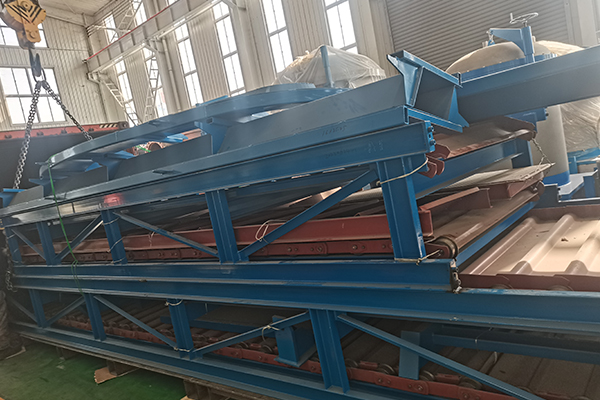
Cultural paper production typically uses fully bleached chemical pulp — either hardwood (eucalyptus, acacia, birch) for bulk and opacity or softwood (pine, spruce) for strength. The typical furnish blend is 70–85% hardwood and 15–30% softwood for standard copy paper grades. Stock preparation for fine paper requires more gentle treatment than packaging grades to preserve fiber integrity and brightness.
Pulping and Deflaking
Leizhan’s medium-consistency hydrapulpers for bleached pulp operate at 6–8% consistency with rotor speeds of 150–200 rpm. For market pulp bales, pulping time is 20–35 minutes with specific energy of 15–22 kWh/t. A deflaker installed downstream removes fiber bundles without reducing freeness, operating at 3–5% consistency with 0.2–0.5 mm plate clearance.
Screening and Cleaning
Fine paper requires slot sizes of 0.10–0.20 mm in the fine screening stage to achieve the cleanliness demanded by high-speed printing and copying applications. Leizhan’s pressure screens for cultural paper operate at 0.8–1.5% inlet consistency with reject rates of 10–15% going to a secondary screen for fiber recovery. Centrifugal cleaners with 75 mm cones at 0.5–0.8% consistency remove sand and heavy particles with 95%+ efficiency.
Refining for Fine Paper: Balancing Strength and Bulk
Refining cultural paper pulp presents a unique challenge: develop sufficient bonding strength for runnability while preserving the bulk and opacity that give paper its “feel” and printability. The following parameters guide fine paper refining:
| Parameter | Hardwood (Eucalyptus) | Softwood (Pine) |
|---|---|---|
| Net refining energy | 40–70 kWh/t | 80–140 kWh/t |
| Specific edge load (SEL) | 0.5–1.2 J/m | 1.0–2.0 J/m |
| Freeness target (CSF) | 350–450 mL | 500–600 mL |
| Refining consistency | 3.5–4.5% | 3.5–4.5% |
| Plate material | Stainless steel | Stainless steel or alloy |
Note that separate refining of hardwood and softwood fractions is essential for fine paper. Combined refining leads to either over-refined hardwood (loss of bulk and opacity) or under-refined softwood (insufficient strength and poor formation). Leizhan provides dedicated refiner lines with independent load control for each furnish component.
Filler Retention and Wet-End Chemistry
Filler content in cultural paper ranges from 15–28% for copy paper grades, using precipitated calcium carbonate (PCC), ground calcium carbonate (GCC), or clay. Filler contributes to opacity, brightness, smoothness, and printability while reducing fiber cost. However, poor filler retention increases white water solids loading and creates two-sidedness problems.
Key wet-end chemistry targets for a cultural paper making line include:
- First-pass filler retention: 45–65% without retention aid, 70–85% with optimized retention aid program
- Zeta potential: -5 to -15 mV for stable colloidal suspension
- Cationic demand: 30–80 µeq/L depending on furnish and broke content
- White water consistency: <0.15% for efficient save-all operation
- pH: 7.0–8.5 for alkaline papermaking with PCC filler
Modern microparticle retention systems combining cationic polyacrylamide (C-PAM) with bentonite or colloidal silica achieve first-pass retention above 80% while maintaining good formation. The incremental cost of retention chemicals ($2–4 per tonne of paper) is recovered 3–5 times through filler savings and reduced steam consumption from improved drainage.
Paper Machine Design for Cultural Grades
Cultural paper machines are typically 2.8–5.5 meters wide with design speeds of 800–1,800 m/min. Key machine sections include:
Headbox and Forming
A hydraulic headbox with dilution profiling is essential for achieving basis weight CD variation below 1.0%. Headbox consistency of 0.5–1.0% with jet-to-wire ratio of 0.98–1.02 ensures good formation. The forming section may use a fourdrinier with hybrid top former for improved filler distribution and reduced two-sidedness.
Press Section
A shoe press with 800–1,200 kN/m loading achieves 48–52% dryness before the dryer section. Higher press dryness directly reduces steam consumption — each 1% increase in press dryness saves approximately 4% of dryer steam. For a 300 TPD fine paper machine, this translates to annual savings of $25,000–$40,000.
Dryer Section and Surface Treatment
The dryer section typically includes 30–50 cylinders in single-tier or double-tier configuration. After the dryer, a size press applies starch solution at 6–10% solids with pickup of 1.5–3.0 g/m² per side. The size press improves surface strength for offset printing and reduces linting.
Calendering and Reel
A soft-nip calender with heated rolls (120–180°C) and nip loading of 100–250 kN/m achieves target smoothness without excessive density increase. Machine-finished cultural paper targets Bendtsen roughness of 150–300 mL/min, while supercalendered grades target <30 mL/min.
Brightness and Optical Properties Management
Brightness is a critical quality parameter for cultural paper. Copy paper typically requires ISO brightness of 90–96%, achieved through a combination of bleached pulp, optical brightening agents (OBAs), and filler selection:
- Pulp brightness: 88–90% ISO for fully bleached eucalyptus market pulp
- OBA addition: 0.2–0.8% on fiber, applied at the size press or wet end
- Filler brightness: PCC provides 94–97% ISO; GCC 88–92% ISO
- Opacity control: TiO₂ addition at 0.5–2.0% for lightweight grades below 70 gsm
Regular monitoring of OBA carryover in the white water system is important — excessive accumulation leads to brightness reversion and quenching effects. A dissolved air flotation (DAF) system with surface loading of 6–10 m³/m²·h maintains white water cleanliness and prevents brightness loss in the approach system.
Maintenance Program for Cultural Paper Lines
Fine paper machines operate at high speeds with tight quality tolerances, making condition-based maintenance essential:
- Refiner plate inspection: Every 400–700 hours for virgin fiber. Plate change at 50% bar height wear for fine paper to maintain refining quality consistency.
- Screen basket condition: Inspect every 2–3 months. Slot width increase beyond 0.02 mm for fine screens triggers replacement.
- Headbox cleaning: Quarterly internal inspection and cleaning. Slice lip straightness should be verified with a precision straightedge; deviation over 0.05 mm across the machine width requires correction.
- Calender roll grinding: Every 6–12 months depending on operating hours. Roll surface roughness (Ra) should be maintained at 0.2–0.5 µm for soft-nip calender rolls.
- QCS sensor calibration: Monthly verification of basis weight, moisture, and ash sensors against laboratory measurements ensures accurate process control.
Zhengzhou Leizhan Technology provides complete cultural paper stock preparation systems — from bale pulping through approach flow — for writing and printing paper mills. Our equipment is designed for the cleanliness and precision that fine paper grades demand, with polished stainless steel surfaces and low-shear pumping to protect fiber quality.
Contact us at leizhanzhang@gmail.com | Zhengzhou Leizhan Technology Paper Machinery Co., Ltd.