
Cultural Paper Machine Configuration Guide: Specifications and Quality Control
Cultural paper — encompassing printing and writing grades such as copy paper, offset paper, notebook paper, and lightweight coated papers — represents one of the largest segments of the global paper market. Despite the growth of digital communication, demand for cultural paper in education, office printing, and publishing remains substantial, particularly in developing markets. Producing high-quality cultural paper requires precision machine engineering, sophisticated process control, and rigorous quality management. This guide presents the technical specifications, process parameters, energy data, and maintenance practices that cultural paper mill operators need to achieve competitive production efficiency and product quality.
Cultural Paper Production Technology Overview
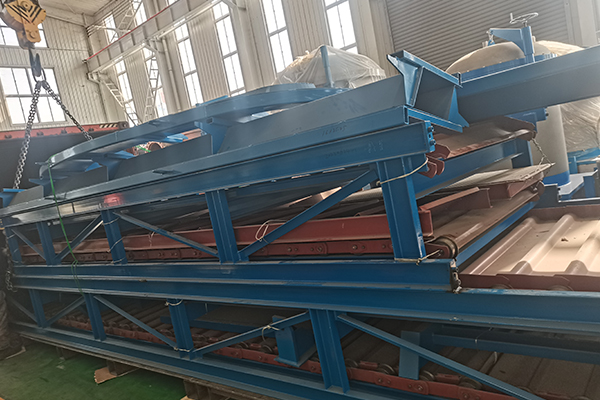
Cultural paper grades span basis weights from 45 gsm for lightweight printing paper to 120 gsm for heavy copy paper and cover stock. The production process combines refined chemical pulp — typically bleached hardwood and softwood kraft in ratios of 70:30 to 55:45 — with mineral fillers such as calcium carbonate or kaolin clay that improve opacity, brightness, and printability. The filler content in cultural paper ranges from 10% to 25% by weight, presenting retention challenges that must be addressed through optimized wet-end chemistry.
The paper machine for cultural grades is generally a Fourdrinier or hybrid former design, with machine widths from 2.8 meters to 8.5 meters and operating speeds from 500 to 1,500 m/min depending on the grade and machine scale. The forming section employs a hydraulic headbox with slice lip profiling and dilution control for cross-machine basis weight uniformity. Following the forming table, the sheet enters a press section with two or three nips achieving 40-45% dryness. A size press applies surface starch or synthetic size at 6-10% solids to develop surface strength and control liquid penetration during printing. Many cultural paper machines include a soft calender or multi-nip calender stack that develops the smoothness and gloss required for modern printing processes.
The approach flow system for cultural paper demands exceptional cleanliness. Machine screens with 0.15-0.20 mm slot baskets and multi-stage centrifugal cleaner systems remove contaminants that would cause defects visible in the finished sheet. Consistency control at ±0.02% of setpoint is maintained through precise dilution water addition, ensuring uniform fiber distribution in the forming zone. Retention aid chemicals — typically dual-polymer systems combining cationic polyacrylamide with microparticle silica or bentonite — achieve first-pass retention rates of 65-80%, balancing cost efficiency with formation quality.
Technical Specifications for Cultural Paper Machines
Cultural paper machine specifications reflect the balance between production capacity, product quality requirements, and operating economics. The following parameters are critical for mill operators evaluating new equipment or benchmarking existing operations.
Machine Width and Production Rate: Cultural paper machines are designed for specific capacity targets based on market demand and available furnish. A 3.8-meter machine operating at 900 m/min on 80 gsm copy paper produces approximately 295 tonnes per day. Increasing to 1,100 m/min on lighter 60 gsm offset paper raises output to roughly 315 TPD. Larger 6.5-meter machines at 1,200 m/min on 80 gsm can exceed 650 TPD. The production rate calculation must account for the typical 92-96% machine efficiency — the ratio of actual production to theoretical maximum — which accounts for grade changes, sheet breaks, and scheduled maintenance time.
Headbox and Forming Section: The headbox is the single most critical component for cultural paper quality. Hydraulic headboxes with slice openings of 8-15 mm deliver stock at jet-to-wire speed ratios between 0.95 and 1.05, with the exact ratio optimized for the target fiber orientation profile. Dilution profiling systems with 50-100 mm actuator spacing control basis weight variation to within ±0.8% across the sheet. The forming table includes a forming board, foil blades with angles progressing from 1° to 3°, and wet vacuum boxes applying 10-25 kPa vacuum for controlled dewatering. Dry vacuum boxes in the later table sections apply 25-40 kPa for final consolidation before the couch roll.
Press Section Design: Modern cultural paper machines employ either a three-nip roll press or a shoe press in the third position. A typical three-nip configuration achieves 40-43% dryness entering the dryers with nip loads of 70-100 kN/m in the first press and 90-120 kN/m in subsequent nips. Shoe press installations with extended nip lengths of 200-250 mm and peak pressures of 4-6 MPa achieve 47-50% post-press dryness, reducing dryer steam demand by 12-18% compared to conventional roll presses. Press felt design — including base fabric construction, batt fiber blend, and surface treatment — must be specified for the specific grade, speed, and nip load conditions of each position.
Calendering and Finishing: Soft calenders with 2-4 nips per stack, heated rolls at 120-180°C, and nip loads of 100-350 kN/m develop the surface smoothness required for cultural paper grades. The calender configuraiton — including roll cover materials (cotton, polymer, or composite), heating uniformity, and nip load profiling — determines the final sheet properties. Smoothness values of 150-300 ml/min (Bendtsen) and gloss of 15-35% (75° TAPPI) are typical targets for uncoated cultural grades.
Energy Efficiency and Cost Control in Cultural Paper Mills
Energy cost control is a strategic priority for cultural paper producers facing competitive pricing pressure. A typical cultural paper mill consumes 500-700 kWh of electrical energy and 1.5-2.1 tonnes of steam per tonne of product, with the combined energy cost representing 18-28% of the total manufacturing expense.
Electrical Energy Breakdown: Stock preparation accounts for 170-250 kWh/tonne, with pulp refining being the dominant load. Refiners for cultural paper grades — typically conical or double-disc designs — operate at specific edge loads of 1.0-2.0 Ws/m for hardwood and 2.0-3.5 Ws/m for softwood. Proper refiner plate selection and operating consistency (3.5-4.5%) minimize the specific energy required to reach the target freeness of 350-450 ml CSF for copy paper grades. The paper machine electrical consumption of 280-400 kWh/tonne is distributed across vacuum pumps (80-130 kWh/tonne), fan pumps (30-50 kWh/tonne), dryer drives (50-80 kWh/tonne), and auxiliary systems. Installing vacuum system optimization — including correctly sized vacuum pumps with VFD control and sequential vacuum level staging — reduces vacuum system energy by 15-25%.
Thermal Energy Optimization: Steam consumption for the dryer section is 1.5-2.1 tonnes per tonne of paper, depending on press section efficiency and dryer configuration. Dryer cylinders are typically grouped into 4-8 drive sections with steam pressures increasing from 0.15-0.25 MPa in the first groups (after the size press) to 0.35-0.50 MPa in the final groups. The dryer hood — either open or fully enclosed — affects heat loss and ventilation energy. Enclosed hoods with heat recovery systems capturing exhaust air at 80-95°C and 140-180 g water/kg dry air can recover 12-18% of dryer energy input. Steam and condensate system design, including proper siphon clearance and blow-through steam management, directly affects drying efficiency. Excessive blow-through steam — above 10-15% of total steam flow — indicates siphoning problems that should be corrected during the next shutdown.
Cost Reduction Through Process Integration: Cultural paper mills achieve significant cost savings through process integration. Using back-pressure steam turbines for on-site power generation before supplying process steam to the dryers typically reduces electricity costs by 25-40% compared to purchased power. Recovering process water from the paper machine save-all (disk filter or dissolved air flotation) and reusing it for stock dilution and shower water reduces fresh water consumption to 5-10 m³/tonne and lowers effluent treatment costs. Zhengzhou Leizhan Technology designs integrated production lines that maximize these interconnections between process systems.
Maintenance Planning for Consistent Quality Output
Cultural paper customers demand consistent product quality — basis weight uniformity, formation, smoothness, brightness, and opacity must meet tight specifications on every reel. Machine condition directly affects quality consistency, making preventive maintenance a quality assurance function as much as a reliability function.
Critical Component Maintenance: The headbox slice lip requires inspection every 3-6 months for straightness and surface condition. Lip deflection or localized wear creates basis weight streaks that are impossible to correct through dilution profiling alone. Headbox internal surfaces accumulate deposits from wet-end chemicals and must be cleaned during each major shutdown. Forming fabric wear, measured by thickness reduction and air permeability change, determines fabric change intervals — typically 45-90 days depending on filler loading and machine speed. Press rolls require profile grinding every 6-12 months to maintain uniform nip pressure; deviation exceeding 0.05 mm on diameter profile causes moisture variation entering the dryers.
Dryer Section Reliability: Dryer gear drives — particularly the open gear designs on older machines — require regular inspection of tooth wear patterns and backlash. Excessive backlash causes speed hunting that manifests as draw variation between sections. Dryer syphons should be inspected for erosion and clearance every 12 months; undersized or eroded syphons fail to remove condensate effectively. Dryer fabric guiding systems — including the guide roll actuators, position sensors, and control logic — must be tested and calibrated monthly to prevent fabric damage from mis-tracking.
Calender Maintenance: Soft calender roll covers are subject to wear, marking, and hardness change during operation. Cover hardness should be measured at multiple positions across the roll face every month; hardness variation exceeding 3 Shore D points indicates uneven wear requiring grinding. Calender roll temperature uniformity — within ±3°C across the heated rolls — is essential for uniform sheet properties. Thermography during operation detects heating system problems before they affect product quality.
Condition Monitoring Program: A comprehensive condition monitoring program including vibration analysis on all major rotating equipment, oil analysis on gearboxes and hydraulic systems, thermography on electrical panels and dryer sections, and ultrasonic testing on pressure vessels and dryer shells provides early warning of developing problems. The cost of condition monitoring equipment and services is typically recovered many times over through avoided unplanned downtime and quality losses.
Technology Selection for Cultural Paper Mills
Selecting the appropriate production technology for cultural paper involves matching machine specifications to the target product portfolio, available raw materials, site infrastructure, and financial parameters. Working with an experienced equipment provider reduces project risk and accelerates the path to stable commercial production.
Machine Capacity Selection: The machine capacity should be based on realistic market projections considering both domestic demand and export opportunities. Oversizing the machine beyond market demand leads to chronic under-utilization and poor return on investment. Zhengzhou Leizhan Technology works with customers to develop capacity plans that align machine specifications with market requirements, offering complete production lines with capacities from 50 TPD to 500 TPD for cultural paper grades.
Automation Level: The degree of process automation affects both capital cost and operating efficiency. Basic automation includes DCS control of stock preparation and machine processes with operator-initiated grade changes. Advanced automation adds QCS (Quality Control System) with scanning sensors for basis weight, moisture, and caliper, plus automatic grade change sequencing and multivariable control. The incremental investment in advanced automation is typically recovered within 12-24 months through reduced grade-change time, lower broke generation, and improved quality consistency.
Contact us at leizhanzhang@gmail.com | Zhengzhou Leizhan Technology Paper Machinery Co., Ltd.