
Corrugated Paper Production Line: High-Efficiency Equipment and Process Guide
Understanding Corrugated Paper Production
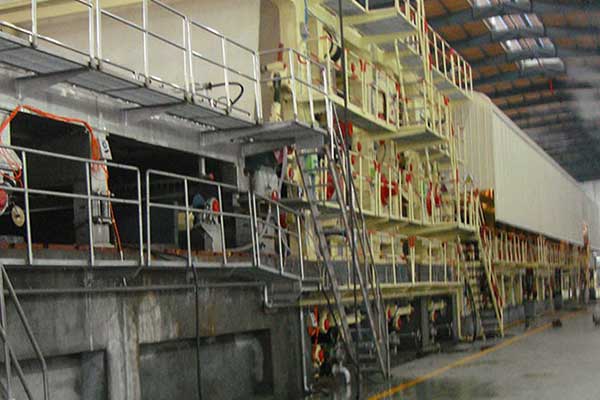
Corrugated paper — encompassing corrugating medium (fluting) and testliner — is the backbone of the global packaging industry. A modern corrugated paper production line processes 100–500 TPD of recycled fiber (primarily OCC — old corrugated containers) into rolls of medium and liner grades that feed corrugator machines worldwide.
Leizhan Technology engineers complete corrugated paper lines with robust equipment designed for high-contaminant recycled fiber streams. This guide covers the entire line — from pulping through the reel — with specific technical parameters, energy benchmarks, and maintenance schedules that help mills maximize output and minimize cost per ton.
OCC Pulping and Contaminant Removal
Old corrugated containers are the primary raw material for corrugated paper production. OCC contains varying levels of contaminants including staples, tapes, plastics, wet-strength paper, and polystyrene. The stock preparation system must handle these contaminants without excessive fiber loss.
Pulping Equipment:
- Drum Pulper — For lines above 200 TPD. Capacity 200–600 TPD, drum diameter 3.0–4.0 m, length 12–20 m, consistency 14–18%, motor 160–400 kW, drum speed 12–18 rpm. The high-consistency zone provides gentle defibering; the screening zone (perforations 10–16 mm) removes large contaminants continuously. Reject discharge via end-ring or axial conveyor.
- D-Type Hydrapulper — For lines 100–250 TPD. Vat volume 15–40 m³, consistency 4–6%, extraction plate holes 8–16 mm, rotor diameter 1000–1650 mm, motor 75–250 kW. Equipped with ragger rope and junk trap for continuous contaminant removal.
Post-Pulping Deflaking:
- Deflaker — Disc diameter 450–600 mm, motor 55–160 kW, throughput 50–200 TPD, consistency 3–5%. Breaks down fiber flakes and un-defibered wet-strength paper fragments without cutting fibers. Peripheral speed 20–25 m/s.
Screening and Cleaning System for OCC-Based Lines
OCC-derived stock carries heavy contaminant loads. A properly designed screening and cleaning system removes 95–99% of visible contaminants while achieving fiber recovery rates above 96%.
Four-Stage Contaminant Removal System:
| Stage | Equipment | Operating Parameters | Removes |
|---|---|---|---|
| 1 | High-Density Cleaner | Consistency 2.5–4%, ΔP 0.03–0.06 MPa, reject rate 8–15% | Stones, metal, glass, sand |
| 2 | Medium-Consistency Pressure Screen (Coarse) | Hole 2.5–3.5 mm, consistency 2–3.5%, motor 37–90 kW | Plastic sheets, wet-strength paper, tapes |
| 3 | Low-Consistency Pressure Screen (Fine) | Slot 0.25–0.35 mm, consistency 0.8–1.5%, motor 45–132 kW | Stickies, hot melts, small plastic fragments |
| 4 | Forward Cleaners (Lightweight, 3–4 stage) | Cone diameter 75–150 mm, ΔP 0.15–0.20 MPa, accepts consistency 0.5–0.8% | Styrofoam, wax, polyethylene |
Secondary and tertiary screening stages reprocess primary rejects. For example, coarse screen rejects feed a secondary screen (vibration screen or horizontal screen, hole 4.0–6.0 mm); accepts return to the coarse screen feed, rejects go to sludge. This cascade recovers long fiber that would otherwise be lost.
Refining System for Corrugated Grades
Refining objectives for corrugated paper differ from cultural paper. The priority is maintaining fiber length and developing bond strength (burst, RCT, CMT) rather than achieving high smoothness or formation. Over-refining increases fines content, reducing drainage rates and increasing steam consumption without proportional strength gains.
Refining Targets for Corrugated Grades (OCC Furnish):
| Parameter | Corrugating Medium (Fluting) | Testliner |
|---|---|---|
| Inlet Freeness (CSF) | 450–520 | 440–500 |
| Outlet Freeness (CSF) | 360–420 | 340–400 |
| Freeness Drop | 60–100 CSF | 70–110 CSF |
| Specific Energy | 50–80 kWh/ton | 60–100 kWh/ton |
| Optimal SEL | 1.5–3.0 W·s/m | 1.5–2.5 W·s/m |
Leizhan Refiner Configuration:
- Double Disc Refiner DDR-500 — For 100–200 TPD medium/lighter liner. Disc: 500 mm, motor 110–160 kW.
- Double Disc Refiner DDR-660 — For 200–400 TPD heavy-duty liner. Disc: 660 mm, motor 250–400 kW.
- Conical Refiner JC-04 (optional post-refiner) — Cone length 1200 mm, motor 160–250 kW, gentle fibrillation.
Energy accounts for 15–20% of total conversion cost in corrugated paper mills. Installing energy-efficient refiners and optimizing plate patterns can reduce refining electricity by 10–18%. On a 300 TPD line, a 12% reduction saves approximately 2,500,000 kWh per year — roughly $200,000 at $0.08/kWh.
Paper Machine Specifications for Corrugated Paper
Corrugated paper machines run at moderate speeds with heavy basis weights and robust mechanical construction. The forming section must handle high-consistency, fast-draining stock while achieving uniform cross-machine profiles.
Machine Design Parameters (Leizhan Range):
- Wire Width: 3200–5600 mm
- Operating Speed: 150–450 m/min
- Basis Weight: 90–200 g/m² (medium), 100–250 g/m² (liner)
- Headbox: Hydraulic or air-padded. Slice opening 10–18 mm. Consistency 0.5–1.0%. Jet-to-wire ratio 0.96–1.02.
- Forming Section: Fourdrinier with 10–18 drainage elements. Hydrofoil angles 0–3°. Wet boxes with 10–25 kPa vacuum. Dry boxes with 25–45 kPa vacuum. Couch vacuum 50–70 kPa.
- Press Section: 2 nips (suction pick-up + double-felted press). Nip load 80–150 kN/m. After-press dryness 44–49%.
- Dryer Section: 25–45 cylinders × 1500–1800 mm diameter. Pre-dryer steam 0.3–0.5 MPa, after-size-press dryers 0.2–0.3 MPa. Surface size/starch application at size press (optional): 2–4 g/m² for improved strength.
- Reel: Drum reel, max diameter 2500–3000 mm, tension range 2–5 N/mm width.
Energy Benchmarks for OCC-Based Corrugated Paper:
- Stock preparation electricity: 70–120 kWh/ton
- Paper machine electricity: 280–420 kWh/ton
- Total electricity: 350–540 kWh/ton
- Steam consumption: 1.5–2.1 tons/ton paper
- Compressed air: 40–70 Nm³/ton (at 0.6 MPa)
Preventive Maintenance and Spare Parts Management
Corrugated paper mills often run 24/7 with limited shutdown windows. A disciplined preventive maintenance program is the difference between 92% and 97% annual operating efficiency.
| Interval | Activity | Critical Checks |
|---|---|---|
| Daily | Doctor blade check; wire/felt tracking visual; refiner motor current logging | Blade wear uniformity; felt edge wander ≤ 5 mm; current deviation ±5% from baseline |
| Weekly | Screen basket ΔP check; vacuum pump seal water; bearing temperature round | ΔP >20 kPa over clean = schedule cleaning; bearing temp ≤ 70°C |
| Monthly | Deflaker disc gap check; ragger rope condition; sludge press filter cloth inspection | Disc gap 0.2–0.5 mm; ragger rope replace when diameter < 60% of original |
| Quarterly | Refiner plate inspection; press roll rubber cover check; dryer syphon clearance measurement | Plate groove depth ≥ 1.0 mm; roll cover hardness within ±2 P&J of spec |
| Semi-Annual | Gearbox oil analysis; headbox slice lip cleaning; pump impeller clearance check; felt conditioning system audit | Oil TAN ≤ 2.0 mg KOH/g; slice lip parallelism ±0.03 mm |
| Annual | Major shutdown: all roll bearing inspection, drive coupling alignment, machine frame survey, refiner plate full replacement, screen basket replacement (as needed), control valve stroking and calibration, VFD capacitor bank check | Laser alignment of all drivetrains; frame level ±0.05 mm/m |
Critical Spare Parts Inventory for Corrugated Lines:
- Forming fabrics: 2–3 sets (lifetime 40–70 days)
- Press felts: 2–3 sets (lifetime 50–90 days)
- Dryer fabrics: 1–2 sets (lifetime 12–18 months)
- Refiner plates: 1–2 sets per refiner (lifetime 800–2500 hours)
- Screen baskets: 1 spare per screen position (lifetime 8–15 months)
- Doctor blades: 3-month supply (lifetime 8–24 hours)
- Pump mechanical seals: 1 set per critical pump
- Main drive bearings (couch, press, dryer sections): 1 set each
Contact us at leizhanzhang@gmail.com | Zhengzhou Leizhan Technology Paper Machinery Co., Ltd.