
Corrugated Paper Making Line: Fluting Medium, Testliner Production & OCC Recycling Efficiency
Corrugated paper — encompassing fluting medium and testliner — is the world’s most recycled paper product, with recovery rates exceeding 85% in many regions. The corrugated paper making line processes massive volumes of OCC (Old Corrugated Containers) into the structural components of corrugated board: the fluted medium that provides cushioning and stacking strength, and the liner facings that deliver burst and puncture resistance. This article examines the equipment, operating parameters, and maintenance strategies that drive efficient corrugated paper production at scale.
OCC Processing: High-Volume Stock Preparation for Corrugated Paper
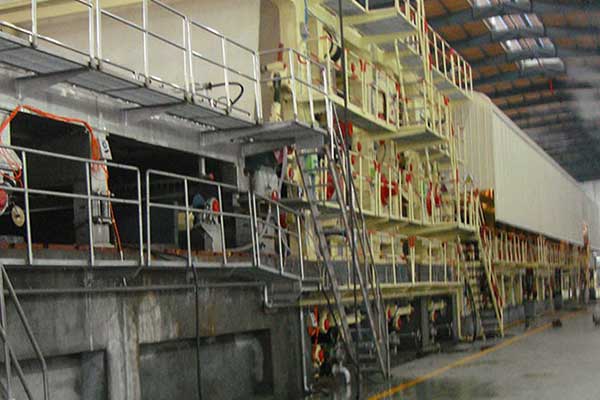
The stock preparation system is the most critical section of a corrugated paper making line. Unlike virgin fiber lines, OCC-based mills face continuous challenges from contaminants, fiber degradation, and furnish variability. A well-designed OCC system processes 300–1,000+ TPD of waste paper while maintaining fiber quality for sheet strength.
Pulping System Design
Leizhan’s high-consistency D-type hydrapulpers for OCC operate at 10–14% consistency with pulping times of 15–25 minutes. The pulper is equipped with a ragger and junk trap for continuous removal of baling wire, plastic straps, and heavy contaminants during the pulping cycle. Specific energy consumption for OCC pulping ranges from 18–28 kWh/t. A typical 500 TPD line uses a pulper with 200–315 kW installed motor power and 3,000–3,800 mm rotor diameter.
After pulping, a dump chest with 30–45 minutes retention time buffers the batch pulping operation, followed by high-density cleaning at 3.0–4.0% consistency with pressure drops of 150–220 kPa across the cleaner bank. Removal efficiency for heavy contaminants (staples, stones, glass, metals) should exceed 98.5%.
Coarse and Fine Screening
The screening cascade for corrugated paper typically includes:
- Primary coarse screen: 1.4–2.0 mm holes, 2.0–3.0% feed consistency, reject rate 10–20%
- Secondary coarse screen: 1.2–1.6 mm holes, processing primary screen rejects for fiber recovery
- Fine screen: 0.20–0.35 mm slots, 0.8–1.5% feed consistency, reject rate 15–25%
- Secondary/rejects fine screen: 0.15–0.25 mm slots for rejects treatment
The slot width in fine screens is the primary control variable for stickies removal. Reducing slot width from 0.35 mm to 0.20 mm typically improves stickies removal efficiency from 65–75% to 85–95%, though at the cost of 5–10% higher reject rates and slightly increased specific energy.
Stickies Control: The Defining Challenge of OCC-Based Production
Stickies — adhesive contaminants from tapes, labels, and hot melts in OCC — are the number one operational problem in corrugated paper mills. Uncontrolled stickies deposit on forming fabrics, press felts, and dryer cylinders, causing sheet breaks, defects, and excessive downtime. A comprehensive stickies control strategy includes:
| Control Stage | Technology | Removal Target | Critical Parameters |
|---|---|---|---|
| Coarse screening | Hole screens 1.4–2.0 mm | 40–55% | Hole size, rotor speed (14–18 m/s tip speed) |
| Fine screening | Slotted screens 0.15–0.30 mm | 80–95% | Slot width, feed consistency, pressure drop (30–60 kPa) |
| Forward cleaning | Lightweight cleaners | 30–50% | Pressure drop 100–150 kPa, consistency 0.5–0.8% |
| Dispersion | Kneader/disperger | N/A (size reduction) | Temperature 80–100°C, consistency 25–35% |
| Chemical control | Talc, bentonite, fixatives | Passivation | Dosage 2–8 kg/t depending on stickies load |
For mills producing lightweight fluting below 100 gsm, stickies control is especially critical as even small deposits cause visible defects and sheet breaks. A combination of 0.15 mm slotted fine screens with thermal dispersion at 90–95°C provides the best protection for lightweight corrugated grades.
Refining and Strength Development for Corrugated Grades
Corrugated paper refining focuses on fiber bonding without excessive freeness reduction that would slow drainage and reduce machine speed. Key refining parameters include:
- Net refining energy: 40–80 kWh/t for fluting, 60–100 kWh/t for testliner
- Specific edge load: 1.5–3.0 J/m — higher than fine paper to favor cutting of long fiber fraction
- Refining consistency: 3.5–5.0% for optimal fiber treatment
- Freeness target: 400–550 mL CSF for fluting, 350–480 mL CSF for testliner
- Refiner plate life: 300–500 hours with OCC due to abrasive contaminants
Leizhan’s double-disc refiners for corrugated paper feature tungsten carbide-coated plate segments that extend plate life to 600–900 hours even with contaminated OCC furnish. The PLC-based load control maintains ±2% accuracy on net specific energy, ensuring consistent fiber treatment across production runs.
Strength targets for corrugated paper grades:
| Property | Fluting 112 gsm | Fluting 140 gsm | Testliner 125 gsm | Testliner 150 gsm |
|---|---|---|---|---|
| CMT₃₀ (min) | 180 N | 240 N | — | — |
| SCT CD (min) | 1.3 kN/m | 1.8 kN/m | 1.8 kN/m | 2.2 kN/m |
| Burst index (min) | — | — | 2.0 kPa·m²/g | 2.5 kPa·m²/g |
| Cobb 60 | <60 g/m² | <60 g/m² | <50 g/m² | <50 g/m² |
Energy Consumption and Optimization
Corrugated paper mills operating on 100% OCC have total specific energy consumption of 1,600–2,200 kWh/t, distributed as follows:
- Stock preparation: 100–150 kWh/t (6–8% of total) — pulping, screening, cleaning, refining
- Paper machine drives: 80–120 kWh/t (5–7%) — forming, pressing, drying sections
- Vacuum system: 70–110 kWh/t (4–6%) — uhle boxes, suction rolls, felt conditioning
- Steam for drying: 1,200–1,700 kWh/t equivalent (70–78%) — the dominant energy consumer
- Auxiliaries: 50–100 kWh/t (3–5%) — lighting, compressed air, water systems
The dryer section steam consumption of 1.3–1.7 tonnes steam per tonne of paper can be reduced by 10–15% through: (1) increasing press section dryness from 44% to 48% using higher nip loading or shoe press technology; (2) installing a closed hood with heat recovery that preheats combustion air and process water; (3) optimizing dryer fabric permeability and tension for maximum heat transfer.
Preventive Maintenance for High-Uptime Operation
Corrugated paper mills typically operate 340–355 days per year with only 1–2 planned shutdowns. Achieving this availability requires disciplined preventive maintenance:
- Pulper extraction plate: Inspect hole condition weekly. Hole diameter increase beyond 20% of original requires plate replacement.
- Pressure screen baskets: Clean and measure slot width every 3–4 weeks. Replace when slot width exceeds nominal by 0.05 mm.
- Refiner plates: Monitor power consumption trend — a 10–15% increase at constant throughput indicates plate wear. Replace at 50% bar height remaining.
- Cleaner cones: Inspect for wear at the apex every 6 months. Cone replacement when lower orifice diameter increases by 15%.
- Wire and felt tracking: Daily visual inspection of tracking and tension. Misalignment over 10 mm from centerline requires immediate correction.
- Bearing vibration monitoring: Monthly vibration readings on all major rotating equipment — pulper rotor, refiner shafts, pump motors, fan bearings. Trend analysis provides 2–4 weeks advance warning of developing failures.
A well-maintained corrugated paper line achieves overall equipment effectiveness (OEE) of 85–92%, with unplanned downtime below 2% of available production hours. The investment in condition monitoring equipment and CMMS software typically pays back within 12–18 months through reduced emergency repairs and increased production capacity.
Zhengzhou Leizhan Technology engineers complete OCC stock preparation systems for corrugated paper mills worldwide. Our equipment — high-consistency hydrapulpers, multi-stage screening systems, forward and reverse cleaners, thermal dispersion units, and double-disc refiners — is built for the demanding 24/7 operation that corrugated paper production requires, with robust construction and accessible maintenance designs.
Contact us at leizhanzhang@gmail.com | Zhengzhou Leizhan Technology Paper Machinery Co., Ltd.