
Corrugated Paper Machine Guide: Specifications and Energy-Saving Strategies
Corrugated paper — comprising corrugating medium (fluting) and testliner grades — forms the structural core of corrugated packaging, the most widely used transport packaging material worldwide. Driven by e-commerce growth, sustainable packaging mandates, and the replacement of plastic packaging, global demand for corrugated paper continues to expand at 3-5% annually. Manufacturing corrugated paper presents unique technical challenges: the need to produce lightweight yet strong sheets from high-yield or recycled fiber sources while maintaining competitive production costs. This guide covers the machine specifications, process parameters, energy benchmarks, maintenance practices, and equipment selection criteria essential for efficient corrugated paper production.
Corrugated Paper Manufacturing Process
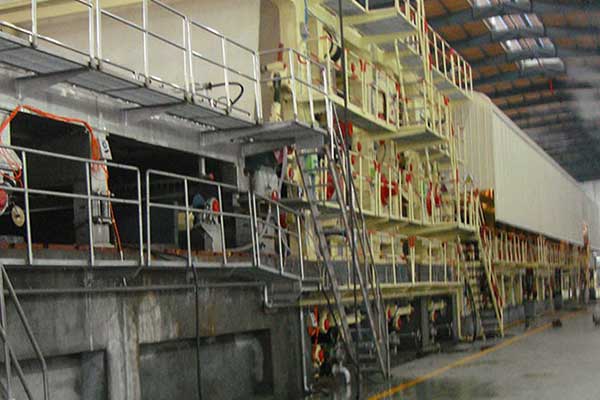
Corrugated paper production utilizes furnish that is predominantly recycled fiber — old corrugated containers (OCC) typically comprise 80-100% of the fiber input for both corrugating medium and testliner grades. The stock preparation process begins with high-consistency pulping at 12-18% consistency, where the OCC bales are broken down into individual fibers while preserving fiber length. The pulping stage is followed by high-density cleaning to remove heavy contaminants (staples, sand, glass) and coarse screening to remove large lightweight contaminants (plastic film, tape, polystyrene). Fine screening with 0.20-0.35 mm slotted baskets removes smaller contaminants that would affect sheet quality and machine runnability.
After cleaning and screening, the stock undergoes fractionation in some mills — separating the long-fiber fraction for use in testliner grades from the short-fiber fraction used in corrugating medium. Refining is applied selectively, with testliner receiving more intensive refining (specific edge load of 1.5-2.5 Ws/m, achieving 350-400 ml CSF) to develop strength properties, while corrugating medium receives lighter refining (1.0-1.5 Ws/m, 400-480 ml CSF) to preserve bulk and stiffness. The approach flow system delivers stock to the paper machine headbox at 0.5-1.0% consistency, higher than for fine paper grades due to the longer fiber fraction and higher drainage rates required.
On the paper machine, a Fourdrinier or gap-former configuration forms the sheet at basis weights ranging from 90 gsm for lightweight corrugating medium to 200 gsm for heavy testliner. The forming section is designed for high drainage capacity to handle the relatively freer stock. The press section with two or three nips achieves 44-48% dryness entering the dryers. The dryer section for corrugated paper is substantial, with 40-70 cylinders, because the economic grades produced do not justify the capital cost of extended nip presses that are more common on higher-value grades. A size press — applying starch at 3-6% solids for medium and 5-8% for testliner — improves surface strength and controls porosity for the corrugating process.
Technical Parameters for Corrugated Paper Machines
Corrugated paper machines are designed for high productivity and robust operation with recycled fiber furnishes that present more variability than virgin pulp. The following technical specifications represent the key parameters for evaluating corrugated paper production equipment.
Production Capacity and Operating Speed: Corrugated paper machines operate at speeds from 400 to 1,000 m/min, with the higher speeds achieved on lighter basis weights and larger machines. A 3.8-meter machine running at 650 m/min on 120 gsm corrugating medium produces approximately 290 tonnes per day. The same machine on 160 gsm testliner at 550 m/min yields roughly 305 TPD. Larger 5.5-meter machines operating at 800-900 m/min can exceed 600 TPD. Machine efficiencies of 90-94% are typical, with the primary efficiency losses being sheet breaks (3-5% loss) and grade changes (2-3% loss).
Forming Section Design: The Fourdrinier forming section for corrugated paper features a hydraulic headbox with slice opening of 10-18 mm and jet-to-wire speed ratio of 0.98-1.02. The forming board and foil section are configured for rapid initial drainage to establish the sheet structure quickly. Vacuum foil boxes and wet suction boxes progressively increase the dewatering driving force as the sheet consolidates. For testliner grades where surface quality is important, a top wire or hybrid former unit may be included to improve formation and reduce two-sidedness. The forming fabric design — typically a triple-layer weave with high drainage capacity and good fiber retention — is specified for the furnish characteristics and machine speed.
Press Section Performance: The press section for corrugated paper typically includes two double-felted presses achieving 44-47% post-press dryness. Press nip loads of 80-110 kN/m for the first press and 100-130 kN/m for later nips are standard. For mills producing heavier testliner grades, a third press or shoe press in the final position is justified by the steam savings achieved through higher post-press dryness. Each percentage point increase in post-press dryness reduces dryer steam consumption by approximately 4-5%, making press section optimization one of the highest-return investments available to corrugated paper producers.
Reel and Winding: Corrugated paper reels are produced at diameters up to 2.5-3.0 meters and reel weights of 10-25 tonnes depending on machine width and basis weight. The reel section must handle these weights with precise tension control to produce uniform roll structure. After the paper machine, the jumbo reels are transferred to a winder for slitting into customer-specified roll widths — typically 1.0-2.5 meters — and rewinding to shipping diameters. Winder performance directly affects customer satisfaction, as poor roll structure causes converting problems at the corrugator plant.
Energy Saving Strategies in Corrugated Paper Production
Corrugated paper mills face intense cost competition, making energy efficiency a critical determinant of profitability. The total energy consumption for a corrugated paper line ranges from 480 to 680 kWh equivalent per tonne — lower than fine paper grades due to less intensive refining and generally lower brightness requirements — but still representing 20-30% of manufacturing cost.
Stock Preparation Energy Optimization: The stock preparation system consumes 160-240 kWh/tonne, with the pulper and refiners as the dominant loads. Pulper energy can be optimized through proper bale handling and feeding — maintaining consistent furnish quality avoids the need for extended pulping time. Refiner energy is reduced by operating the OCC cleaning and screening system efficiently, removing contaminants that would otherwise require additional refining energy to disperse. Installing refiner plate designs optimized for recycled fiber — with bar patterns that maximize fiber development per unit of energy input — reduces refining energy by 8-15% compared to standard plate designs. Zhengzhou Leizhan Technology’s ZDF series refiners incorporate energy-efficient designs that achieve target freeness levels while minimizing specific energy consumption.
Paper Machine Energy Profile: The paper machine electrical consumption of 250-370 kWh/tonne is distributed across vacuum pumps (70-120 kWh/tonne), fan pumps (30-50 kWh/tonne), dryer drives (45-75 kWh/tonne), and auxiliary systems. Vacuum system optimization offers the largest single energy saving opportunity. Installing VFDs on vacuum pumps with automatic control based on actual vacuum demand — rather than running at fixed speed with bleed valves — reduces vacuum system energy by 15-25%. Sequencing the vacuum system so that high-vacuum pumps serve the couch and suction press rolls while medium-vacuum pumps serve the flat boxes avoids wasting energy by using unnecessarily high vacuum levels on lower-demand positions.
Thermal Energy Management: The dryer section consumes 1.4-2.0 tonnes of steam per tonne for corrugated grades, somewhat less than fine paper due to the lower dryness requirements for these economic grades. Key optimization strategies include maintaining the dryer syphon system for efficient condensate removal — flooded dryers require 20-30% more steam to achieve the same drying rate — and optimizing the dryer hood exhaust humidity setpoint. Raising the exhaust humidity from 140 to 160 g water/kg dry air reduces exhaust air volume and associated heat loss by 12-15%. Dryer fabric permeability must be monitored; fabrics with reduced permeability trap moisture and reduce drying efficiency by 5-10%.
Integrated Energy Recovery: Heat recovery from the dryer hood exhaust — using air-to-air or air-to-water heat exchangers — can recover 10-14% of dryer energy input for use in process water heating, stock heating, and building heating. The recovered heat replaces steam that would otherwise be required for these purposes, directly reducing the boiler fuel consumption. A well-designed heat recovery system for a 350 TPD corrugated paper machine can save 0.15-0.25 tonnes of steam per tonne of production, representing significant annual cost reduction at typical steam costs.
Maintenance Schedule for Long-Term Reliability
Corrugated paper machines handling recycled fiber face accelerated wear from abrasive contaminants that survive the cleaning and screening process. A proactive maintenance program tailored to these conditions is essential for maintaining machine availability and product quality.
Wear-Prone Component Management: Forming fabrics on corrugated paper machines experience higher wear rates than on machines using virgin pulp due to residual abrasive particles in the recycled stock. Fabric life of 30-60 days is typical, with wear monitored through thickness and air permeability measurements. Press felts face similar challenges from abrasive fillers and contaminants, with typical life of 30-50 days for pickup felts and 40-70 days for bottom felts. Felt conditioning systems — high-pressure showers at 2.5-3.5 MPa and uhle boxes — must be inspected for nozzle plugging and vacuum slot wear weekly; compromised conditioning accelerates felt filling and shortens felt life.
Rotating Equipment Monitoring: All major rotating equipment — refiners, fan pumps, vacuum pumps, pressure screen rotors, and agitators — should be included in a vibration monitoring program with monthly data collection. Trend analysis of vibration signatures detects developing bearing defects, imbalance, and misalignment before failure occurs. Oil analysis on gearboxes and hydraulic systems at 500-hour intervals provides early detection of wear particles and contamination. The investment in condition monitoring typically pays for itself through a single avoided catastrophic failure of a major machine component.
Scheduled Maintenance Intervals: Corrugated paper mills typically schedule maintenance shutdowns every 3-4 weeks for 12-18 hours, coinciding with fabric changes. These shutdowns include: press roll surface inspection, doctor blade replacement, screen basket inspection and cleaning, refiner plate gap measurement, calender roll inspection, and minor mechanical and electrical repairs. Quarterly shutdowns of 24-36 hours add dryer syphon inspection, drive chain/belt tension checks, pump mechanical seal inspection, and instrumentation calibration. Annual shutdowns of 5-7 days cover complete equipment overhauls: refiner plate replacement, dryer internal inspection, major drive component inspection, pressure vessel testing, electrical system maintenance, and comprehensive safety system testing.
Production Line Configuration Considerations
Investing in a corrugated paper production line requires careful evaluation of multiple factors beyond equipment specifications. The flexibility to produce both corrugating medium and testliner on the same machine, the ability to handle varying OCC quality, and the integration of process systems all affect project economics.
Grade Flexibility: A well-designed corrugated paper machine can produce both corrugating medium (90-150 gsm) and testliner (125-200 gsm) through adjustments to furnish preparation, refining levels, and machine operating parameters. This flexibility allows mills to respond to changing market conditions, shifting production to the grade with better margins. The changeover time between grades — typically 20-40 minutes including the transition period — affects the economic viability of frequent grade changes. Zhengzhou Leizhan Technology designs corrugated paper lines with the process flexibility needed for multi-grade operation.
Supplier Partnership: The relationship with the equipment supplier extends well beyond delivery and commissioning. Technical support for process optimization, spare parts availability, and troubleshooting assistance determine the long-term performance of the investment. Zhengzhou Leizhan Technology provides comprehensive after-sales support including operator training, process optimization services, and rapid spare parts supply for all supplied equipment, helping customers maintain competitive production efficiency throughout the equipment lifecycle.
Contact us at leizhanzhang@gmail.com | Zhengzhou Leizhan Technology Paper Machinery Co., Ltd.