
Complete Tissue Paper Production Line: From Pulp to Finished Roll
Understanding the Modern Tissue Paper Making Line
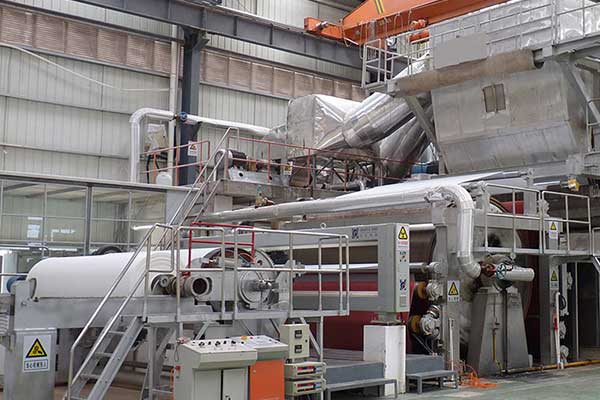
The tissue paper industry has evolved significantly over the past decade. A modern tissue paper production line integrates pulping, screening, refining, sheet forming, drying, creping, and winding into one continuous process. Whether producing facial tissue, toilet paper, napkins, or kitchen towels, the core equipment configuration determines product quality, energy consumption, and overall line efficiency.
At Zhengzhou Leizhan Technology, we design and manufacture complete tissue paper making lines with capacities ranging from 30 TPD (tons per day) to 200 TPD. Our equipment serves tissue mills across Southeast Asia, the Middle East, Africa, and South America. This article walks through every stage of a tissue production line, covering technical parameters, energy benchmarks, and maintenance practices that keep your operation running smoothly.
Stage 1: Stock Preparation and Pulping System
The tissue making process begins in the stock preparation area. For virgin pulp lines, the system typically starts with a hydrapulper that disintegrates dry pulp bales into a pumpable slurry. For recycled fiber lines, a drum pulper or D-type hydrapulper handles waste paper grades including sorted office paper, mixed office waste, and tissue mill broke.
Key equipment in this stage includes:
- D-Type Hydrapulper — Capacity: 30–200 TPD, consistency 4–6%, motor power 55–315 kW, rotor speed 200–350 rpm. The D-type design ensures efficient fiber separation with minimal fiber cutting.
- High-Density Cleaner — Removes heavy contaminants (staples, sand, gravel) at 3–4.5% consistency. Throughput: 800–3500 L/min. Pressure drop: 0.03–0.06 MPa.
- Pressure Screen (Coarse) — Hole size 2.0–3.0 mm, consistency 2.5–3.5%, motor power 30–75 kW. Reject rate controlled at 8–12%.
The stock preparation system for tissue must deliver pulp with high cleanliness and consistent freeness. Contaminants like stickies and plastics directly cause sheet breaks on the tissue machine, so the screening and cleaning stages cannot be compromised.
Stage 2: Refining and Fiber Treatment
After screening and cleaning, the accepted pulp flows to the refining stage. Tissue grades require specific freeness targets depending on the end product:
| Tissue Grade | Target Freeness (CSF ml) | Refining Power (kWh/ton) |
|---|---|---|
| Facial Tissue | 480–550 | 30–50 |
| Toilet Tissue | 550–620 | 25–40 |
| Kitchen Towel | 420–480 | 50–70 |
| Napkin | 450–520 | 40–60 |
Leizhan’s disc refiner series uses cast stainless steel discs with precisely machined bar patterns. Typical configurations:
- Double Disc Refiner (DDR Series) — Disc diameter 400–660 mm, motor 90–450 kW, throughput 30–200 TPD, operating consistency 3.5–5%.
- Conical Refiner — For post-refining and fibrillation, cone angle 22°, filling length 650–1200 mm, motor 55–200 kW.
Refining energy accounts for 15–22% of total tissue mill electricity consumption. Optimizing plate pattern and specific edge load (SEL) can reduce energy by 8–15% while maintaining fiber quality.
Stage 3: Approach Flow and Headbox System
The approach flow system delivers a uniform fiber suspension to the headbox at precisely controlled consistency, pressure, and temperature. Critical parameters include:
- Fan Pump — Flow rate matched to machine speed × slice opening × deckle width. Typically 8000–25000 L/min for a 2.8–5.6 m wide tissue machine.
- Pressure Screen (Fine) — Slot size 0.15–0.30 mm, consistency 0.5–1.2%, motor 37–132 kW. This final screen protects the headbox slice from fiber flocs and contaminants.
- Headbox — Hydraulic or air-padded design. Slice opening 8–14 mm, jet-to-wire ratio 0.95–1.05, consistency 0.15–0.35%.
The approach flow pipework must be polished stainless steel (Ra ≤ 3.2 μm) to prevent fiber buildup. Flow velocity maintained at 2.5–3.5 m/s to avoid sedimentation while minimizing pressure loss.
Stage 4: Tissue Machine — Forming, Pressing, Drying, and Creping
This is the heart of the tissue paper production line. The tissue machine configuration — Crescent Former, Twin-Wire, or suction breast roll — depends on the grammage range and speed requirements.
Typical Tissue Machine Specifications (Leizhan Design):
- Wire Width: 2850–5600 mm
- Operating Speed: 600–2000 m/min
- Grammage Range: 12.5–45 g/m²
- Yankee Dryer: Diameter 3660–5500 mm, steam pressure 0.5–0.9 MPa, surface temperature 120–155°C
- Hood System: Gas-fired or steam-heated, supply air temperature 180–350°C, exhaust humidity 0.18–0.25 kg H₂O/kg dry air
- Steam Consumption: 1.8–2.5 tons steam per ton of tissue paper
- Electricity Consumption: 350–550 kWh per ton (entire machine, including drives, vacuum, and auxiliaries)
The Yankee dryer coating and creping doctor blade are critical for tissue softness and bulk. Blade angle (85–92°), bevel angle (15–25°), and blade material (steel, ceramic, or composite) directly affect crepe ratio (10–25%) and sheet properties.
Maintenance Schedule for Tissue Production Lines
Preventive maintenance prevents unplanned downtime, which costs a typical tissue mill $5,000–15,000 per hour in lost production. Recommended schedule:
| Frequency | Task | Key Check Points |
|---|---|---|
| Daily | Doctor blade inspection; felt/wire tracking check; vacuum pump seal water flow | Blade wear pattern, felt edge condition, vacuum level (40–65 kPa) |
| Weekly | Refiner plate gap calibration; screen basket flushing; bearing temperature logging | Plate gap: 0.15–0.35 mm; bearing temp ≤ 75°C; screen ΔP ≤ 25 kPa |
| Monthly | Yankee dryer surface inspection; roll bearing greasing; pump mechanical seal check | Surface roughness Ra 1.6–3.2 μm; no condensate accumulation |
| Quarterly | Refiner plate replacement (if needed); fan pump impeller inspection; headbox slice cleaning | Plate wear ≤ 3 mm; impeller clearance check |
| Annual | Complete machine shutdown — felt/wire replacement, Yankee dryer internal inspection, gearbox oil change, control valve calibration | Yankee shell thickness UT test; gearbox oil viscosity and metal particle analysis |
Typical component lifetimes under normal operation: forming fabric 45–75 days, press felt 60–120 days, Yankee doctor blade 4–12 hours, refiner plates 800–3000 operating hours.
Why Choose Leizhan for Your Tissue Paper Making Line
Zhengzhou Leizhan Technology provides complete tissue paper production solutions — from stock preparation to the reel. Our engineering team evaluates your raw material, target output, and end-product specification to configure the optimal line. We support installation supervision, commissioning, and operator training to ensure your line reaches design capacity within the ramp-up period.
Every Leizhan tissue line includes detailed documentation: P&ID diagrams, equipment datasheets, foundation drawings, and maintenance manuals. Spare parts for critical wear components — refiner plates, screen baskets, doctor blades — are kept in stock for rapid dispatch.
Contact us at leizhanzhang@gmail.com | Zhengzhou Leizhan Technology Paper Machinery Co., Ltd.