
Complete Guide to Tissue Paper Machine Technical Specifications and Performance
Tissue paper manufacturing is one of the most technically demanding segments of the paper industry. The combination of low basis weights, high machine speeds, and exacting softness requirements demands precision-engineered equipment and deep process knowledge. Whether producing toilet tissue, facial tissue, napkin stock, or kitchen towel grades, mill operators face constant pressure to balance productivity, product quality, and operating costs. Understanding the technical specifications of tissue paper machines is the foundation for making informed equipment decisions that drive long-term profitability. This guide covers the essential parameters, energy benchmarks, maintenance protocols, and selection criteria that every tissue mill operator and equipment buyer should understand.
Understanding Tissue Paper Machine Configurations
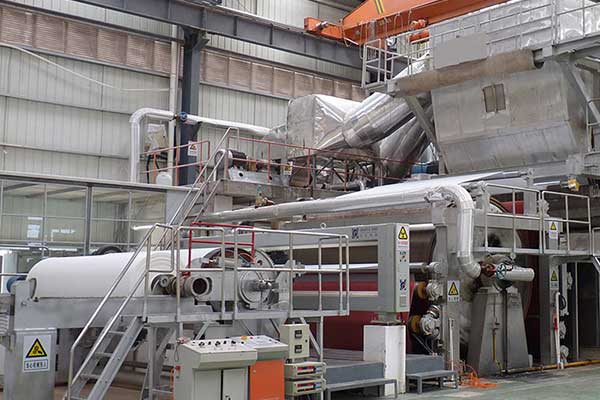
A modern tissue paper machine is a sophisticated system integrating stock preparation, sheet forming, pressing, drying, and converting stages. The most common configuration for premium tissue grades is the Crescent Former design coupled with a large-diameter Yankee dryer cylinder. In this arrangement, the forming fabric and felt converge on a single forming roll, with the sheet transferred directly onto the Yankee surface for drying. This configuration achieves superior sheet softness and bulk compared to conventional Fourdrinier or twin-wire designs used in heavier paper grades.
The stock preparation system upstream of the tissue machine is equally critical. Virgin pulp or recycled fiber must undergo thorough refining to develop the fiber fibrillation required for tissue softness and strength. Disc refiners operating at specific edge loads and cutting angles are standard. Following refining, the stock passes through pressure screens that remove contaminants and fiber bundles, protecting the forming fabric and ensuring uniform sheet formation. The approach flow system delivers stock to the headbox at precisely controlled consistency — typically 0.1% to 0.3% — which is essential for achieving uniform basis weight profiles across the full machine width.
After the Yankee dryer, which operates at steam pressures between 0.4 and 0.8 MPa, the sheet is creped off the cylinder surface using a doctor blade. The creping ratio — the speed difference between the Yankee surface and the reel — is a primary control parameter for tissue softness and stretch. Higher creping ratios produce softer, more extensible sheets but reduce machine productivity. Modern tissue lines are equipped with automated control systems that continuously monitor and adjust creping parameters, basis weight profiles, and moisture levels to maintain consistent product quality.
Key Technical Parameters for Tissue Production Lines
Selecting the right tissue machine requires careful evaluation of multiple technical specifications that directly impact production capacity, product quality, and operating efficiency. The table below summarizes the key parameters that mill operators should consider when evaluating tissue paper machine options.
Machine Width and Trim: Tissue machines typically range from 2.4 meters to 5.6 meters in trim width. Wider machines offer higher production capacity but require larger building footprints and more powerful drive systems. A 3.6-meter machine operating at 1,800 m/min on 15 gsm facial tissue produces approximately 95 tonnes per day. The same machine width on 18 gsm toilet tissue at 1,600 m/min yields approximately 105 TPD.
Design Speed and Operating Speed: Modern tissue machines have design speeds from 1,200 to 2,200 m/min. However, actual operating speeds depend on the basis weight being produced. Lighter grades such as 13 gsm facial tissue can run at higher speeds (1,800-2,000 m/min), while heavier grades like 35 gsm kitchen towel typically operate at 1,200-1,500 m/min. Drive motors for tissue machines are sized between 800 kW and 2,500 kW for the main sections, with the Yankee dryer requiring an additional 300-600 kW drive.
Yankee Dryer Specifications: The Yankee cylinder is the heart of the tissue drying process. Diameters range from 3.6 meters to 5.5 meters, with shell thicknesses from 55 mm to 80 mm in cast iron construction. Operating steam pressure is typically 0.5-0.7 MPa, producing a surface temperature of 150-170°C. The drying rate on a modern Yankee is approximately 180-250 kg of water evaporated per square meter per hour. Hood systems — either gas-fired or steam-heated — provide supplementary drying at air temperatures of 350-550°C and velocities of 100-140 m/s. The combined Yankee and hood system achieves overall drying rates enabling the high production speeds demanded by the tissue market.
Production Capacity: Daily production for a single tissue machine ranges from 30 TPD for smaller machines to over 180 TPD for large high-speed units. A mid-range 3.6-meter machine produced by Zhengzhou Leizhan Technology delivers 80-120 TPD depending on grade mix, with specific energy consumption in the 450-550 kWh per tonne range for the complete line from stock preparation through reel-up.
Energy Consumption and Efficiency Optimization in Tissue Manufacturing
Energy represents one of the largest variable costs in tissue production, accounting for 15-25% of total manufacturing expenses. Understanding energy benchmarks and implementing optimization strategies directly improves mill profitability. A well-designed tissue line should target the following energy performance indicators.
Electrical Energy Consumption: The total electrical energy consumption for a complete tissue production line — from stock preparation through the reel — ranges from 420 to 600 kWh per tonne of finished product. The stock preparation system typically consumes 180-250 kWh/tonne, including pulping, refining, and screening. The paper machine itself consumes 240-350 kWh/tonne, with the vacuum system accounting for the single largest electrical load at 80-130 kWh/tonne. Refiner drives, fan pumps, and ventilation fans represent the next largest consumers.
Thermal Energy Requirements: Steam consumption for the Yankee dryer and air heating for the hood system totals 1.8 to 2.4 tonnes of steam per tonne of paper produced. At a generation cost of approximately $25-35 per tonne of steam, thermal energy costs range from $45 to $84 per tonne of tissue. Cogeneration systems that produce both electricity and process steam can reduce the effective energy cost by 20-35% compared to separate grid electricity and boiler steam.
Optimization Strategies: Several proven approaches reduce energy intensity in tissue mills. Installing variable frequency drives on fan pumps and vacuum pumps can reduce electrical consumption by 15-25% by matching motor speed to actual process demand rather than running at constant speed with throttling valves. Heat recovery systems that capture exhaust air from the Yankee hood and use it to preheat combustion air or process water can recover 8-12% of the total thermal energy input. Optimizing the vacuum system — including using correctly sized vacuum pumps staged for different vacuum levels — can reduce vacuum system energy by 10-18%. Implementing real-time energy monitoring with per-section metering allows operators to identify efficiency drift before it becomes costly.
Preventive Maintenance Schedule for Tissue Paper Machines
A structured preventive maintenance program is essential for maximizing tissue machine availability and extending equipment service life. Tissue machines operate at high speeds with tight tolerances, making them particularly sensitive to wear and alignment issues. The following maintenance schedule represents industry best practices for tissue production lines.
Daily Maintenance Tasks: Operators should inspect the Yankee doctor blade for wear and proper loading every shift, checking the blade holder alignment and blade edge condition. Forming fabric and felt surfaces must be visually inspected for holes, wrinkles, or contamination. Bearing temperatures on all major rolls — particularly the Yankee dryer bearings, pressure roll bearings, and suction roll bearings — should be recorded and trended. Lubrication system oil levels and flow rates need verification. The sheet break detection system should be tested at the start of each shift. These daily checks take 30-45 minutes per shift and prevent the majority of unplanned downtime events.
Weekly Maintenance Tasks: Weekly inspections should include detailed examination of the forming roll and suction press roll shell condition, checking for drill pattern wear or surface damage. The Yankee dryer condensate removal system should be tested for proper siphon operation and steam joint leakage. Felt conditioning showers need nozzle inspection and cleaning to maintain uniform felt moisture profiles. All vacuum pump separators and seal water systems require inspection. Belt tension on all drive belts should be checked and adjusted. Chemical cleaning system pumps and metering valves need calibration verification.
Monthly Maintenance Tasks: Monthly PMs include comprehensive vibration analysis on all major rotating equipment — refiners, fan pumps, vacuum pumps, and drive motors. Oil samples from all major gearboxes and hydraulic systems should be sent for laboratory analysis to detect early signs of bearing wear or contamination. The Yankee dryer surface should be inspected for crown profile changes and surface finish degradation. Electrical connections in MCC panels and drive cabinets need thermal imaging inspection. All safety interlocks and emergency stop circuits require functional testing.
Quarterly and Annual Maintenance: Quarterly shutdowns of 12-24 hours allow for felt and fabric changes, thorough cleaning of the stock approach system, and detailed inspection of the headbox slice lip and consistency profiling actuators. Annual maintenance shutdowns of 3-5 days enable Yankee dryer internal inspection, shell thickness measurement, complete drive alignment checks, refiner plate replacement, and comprehensive electrical system testing.
Equipment Selection Guide for Tissue Paper Mills
Selecting the right equipment for a tissue paper mill involves balancing multiple factors: production capacity requirements, product grade specifications, available raw materials, site constraints, and capital budget. The following considerations help guide the equipment selection process.
Stock Preparation System: For mills using virgin pulp, a medium-consistency pulper with a capacity of 15-25 tonnes per batch, combined with double-disc refiners rated at 200-400 kW each, provides the fiber development needed for soft tissue grades. Mills processing recycled fiber require additional equipment: high-consistency cleaners for heavy contaminant removal, fine screens with 0.15-0.25 mm slot baskets for stickies removal, and flotation deinking cells for brightness improvement. Zhengzhou Leizhan Technology supplies complete stock preparation lines with pulping capacities from 50 to 500 TPD, including ZDF series double-disc refiners that deliver the controlled fiber treatment essential for tissue softness and strength development.
Approach Flow and Headbox: The approach flow system must deliver ultra-clean stock at stable consistency and pressure to the headbox. Key components include a machine screen with 0.10-0.15 mm slots, a highly efficient cleaner system arranged in multiple stages, and a hydraulic headbox with dilution profiling for cross-machine basis weight control. A well-designed approach system will maintain basis weight variation below 1.5% CV (coefficient of variation) across the full sheet width.
After-Sales Support Considerations: Tissue machine buyers should evaluate suppliers on their technical support capabilities, spare parts availability, and process optimization services. Zhengzhou Leizhan Technology provides comprehensive technical support including installation supervision, commissioning assistance, operator training, and ongoing process optimization. Spare parts for all Leizhan-supplied equipment — including refiner plates, screen baskets, and machine clothing — are maintained in inventory for rapid delivery to mill sites worldwide.
Contact us at leizhanzhang@gmail.com | Zhengzhou Leizhan Technology Paper Machinery Co., Ltd.