
Coating Board Paper Making Line: Multi-Ply Forming and Coating Technology
Coating Board Manufacturing Overview
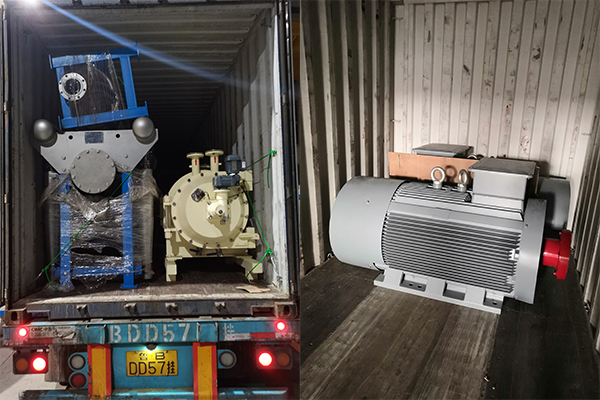
Coating board — including duplex board, triplex board, white back board, and coated folding boxboard — serves the packaging industry for pharmaceuticals, cosmetics, food, and consumer goods. A coating board paper making line is a sophisticated multi-ply system that combines different fiber furnishes in each layer, then applies one or more coating layers to achieve the required surface properties: brightness, smoothness, gloss, and ink holdout.
Leizhan Technology supplies coating board lines from 80 TPD to 350 TPD, with multi-ply forming configurations that optimize fiber cost while delivering premium surface quality. This article covers the complete line configuration with technical specifications for each process stage.
Stock Preparation — Separate Lines for Each Ply
Coating board uses different fiber grades for each ply layer, requiring independent stock preparation systems. The economic principle is simple: use lower-cost fiber in the middle and back plies, reserve expensive bleached kraft pulp for the top (coated) ply.
Typical Ply Structure and Fiber Furnish:
- Top Ply (20–25% of total basis weight): Bleached hardwood kraft (BHKP) and/or bleached softwood kraft (BSKP). Freeness target: 350–420 CSF. This layer receives the coating and determines brightness and smoothness.
- Middle / Filler Ply (40–55%): Mixed waste, OCC, broke, mechanical pulp (CTMP/BCTMP). Freeness target: 280–380 CSF. Cost-optimized bulk layer.
- Back Ply (20–25%): OCC, mixed waste, or unbleached kraft. Freeness target: 350–430 CSF. Provides strength and back-side printability if required.
Equipment per Stock Preparation Line:
| Stage | Top Ply (Bleached) | Middle/Back Ply (Recycled) |
|---|---|---|
| Pulping | LC Hydrapulper, 4–6% cons., motor 55–132 kW | D-Type or Drum Pulper, 4–15% cons., motor 75–315 kW |
| Cleaning | High-density cleaner, forward cleaners (3-stage) | High-density cleaner, forward cleaners (4-stage), reverse cleaners optional |
| Screening | Pressure screen, slot 0.15–0.25 mm | Pressure screen (coarse, hole 2.5 mm) + Pressure screen (fine, slot 0.20–0.30 mm) |
| Refining | Disc refiner DDR-400/500, 60–120 kWh/ton | Disc refiner DDR-500, 40–90 kWh/ton |
Each stock preparation line feeds its own machine chest, allowing independent control of consistency, freeness, and additive dosing for each ply.
Multi-Ply Forming Technology
Coating board machines use multi-ply forming to build the sheet layer by layer. The forming section typically employs multiple headboxes feeding separate Fourdrinier wires (cylinder mould formers for very high ply counts) or a multi-ply gap former.
Forming Configurations (Leizhan Design Range):
- Duplex (2-Ply): Two headboxes + two Fourdrinier sections. Top ply wire width: 2400–4200 mm. Back ply wire width: same. Couch roll combining at the end of the forming zone. Operating speed: 100–350 m/min.
- Triplex (3-Ply): Three independent forming sections converging before the press. Each section with dedicated headbox, wire table, and vacuum system. Basis weight range: 200–600 g/m².
Multi-Ply Headbox Parameters:
- Consistency per ply: 0.4–0.8% (top), 0.5–1.0% (middle/back)
- Slice opening: 8–18 mm depending on basis weight split
- Jet-to-wire ratio: 0.97–1.03
- Cross-machine basis weight profile: ±1.5% (2-sigma)
Ply bond strength (Scott bond 150–300 J/m²) is critical. A spray starch application or light water spray between plies before the combining roll enhances inter-ply adhesion without adding cost.
Pressing, Drying, and Pre-Coating Section
After multi-ply forming, the wet board passes through a press section designed for high-nip-load dewatering without crushing. Coating board’s high basis weight means effective pressing is essential for keeping steam costs under control.
Press Section Configuration:
- First Press (Suction Pick-up + Double-Felted): Nip load 80–120 kN/m. After-nip dryness 40–43%.
- Second Press (Shoe Press or Extended-Nip): Nip load 500–1000 kN/m. Shoe length 200–300 mm. After-nip dryness 47–52%. The shoe press dramatically improves water removal for high-basis-weight board.
- Third Press (Smoothing): Nip load 60–100 kN/m. Improves surface smoothness before coating.
Dryer Section:
- Pre-dryer: 25–45 cylinders × 1500–1800 mm diameter. Steam groups at 0.2–0.5 MPa, controlled temperature profile.
- After pre-dryer moisture: 4–7% (board moisture entering pre-coating).
Pre-Coating / Surface Sizing:
- Film press or pond size press applying starch or pigment-starch pre-coat. Coating weight: 2–6 g/m² per side. Solids: 10–18% for starch, 45–55% for pre-coat pigment.
- Provides surface strength, reduces coating penetration into the base sheet.
Coating Section Configuration
The coating section is the defining part of a coating board line. It applies one, two, or three coating layers (pre-coat, mid-coat, top-coat) to one or both sides of the board.
Coating Application Methods (Leizhan-Integrated):
- Blade Coater: Stiff blade or bent blade. Coating weight: 8–15 g/m² per layer. Backing roll hardness 70–90 P&J. Blade angle: 15–45° to the tangent. Provides excellent smoothness and coat weight uniformity.
- Air Knife Coater: For lighter coat weights (5–10 g/m²). Contour coating that follows the sheet surface. More forgiving of base sheet roughness.
- Rod / Metering Bar Coater: Wire-wound or smooth rod. Coat weight 6–12 g/m². Good for pre-coat and mid-coat layers.
Typical Coating Layout (3-Station, Top Side):
- Pre-coat station → After-dryer (2–4 cylinders, infrared or air flotation dryers optional)
- Mid-coat station → After-dryer (2–4 cylinders)
- Top-coat station → Final drying → Calendering
Coating Color Properties:
- Solids content: 55–68% depending on application method
- Brookfield viscosity: 800–2000 cP (100 rpm)
- Pigment composition: Calcium carbonate (60–80%) + kaolin clay (20–40%) + TiO₂ (0–10% for brightness boost)
- Binder: SBR latex or styrene-acrylate (10–14 parts per 100 parts pigment)
- Co-binder: Starch or CMC (0.3–0.8 parts)
Maintenance and Operational Best Practices
Coating board lines have more complex maintenance requirements than uncoated grades due to the coating colour system, multiple forming sections, and high-precision calendering.
| Frequency | Area | Maintenance Task |
|---|---|---|
| Daily | Coating station | Clean coating blade bed, check blade wear, verify coat weight profile (online scanner). Clean coating colour filters (100–150 μm mesh). |
| Weekly | Coating colour kitchen | Check screen condition (150 μm vibrating screen), verify metering pump calibration, clean storage tank level sensors. |
| Monthly | Calender stack | Roll surface inspection (mirror finish), bearing temperature check (≤70°C), hydraulic pressure verification. |
| Quarterly | Multi-ply forming | Check couch roll rubber cover (hardness, grooving), wire alignment, vacuum box ceramic cover wear. |
| Annual | Full line | Coating backing roll regrind/re-cover, dryer syphon inspection, headbox slice lip cleaning and calibration, refiner plate replacement, IR dryer element check, coating circulation pipe descaling. |
Key spare parts for coating board lines: coating blades (monthly supply), forming fabrics per ply (2–3 sets each), press felts (2–3 sets each), dryer fabrics (2 sets), refiner plates (1–2 sets per line), screen baskets (1 set per stage), calender roll bearings, and coating backing roll (1 spare recommended for critical mills).
Contact us at leizhanzhang@gmail.com | Zhengzhou Leizhan Technology Paper Machinery Co., Ltd.