
Coating Board Paper Making Line: Multi-Ply Forming, Coating Technology & Barrier Properties
Coating board — including folding boxboard (FBB), solid bleached sulfate (SBS), and white-lined chipboard (WLC) — serves the packaging needs of food, pharmaceutical, cosmetics, and consumer goods industries. These grades demand exceptional surface smoothness, brightness, and printability on the top side, combined with sufficient bulk and stiffness for package integrity. A coating board paper making line integrates multi-ply forming technology with precision coating application, making it one of the most technically complex papermaking operations. This guide examines the engineering requirements from stock preparation through coating and finishing.
Multi-Ply Stock Preparation for Coating Board
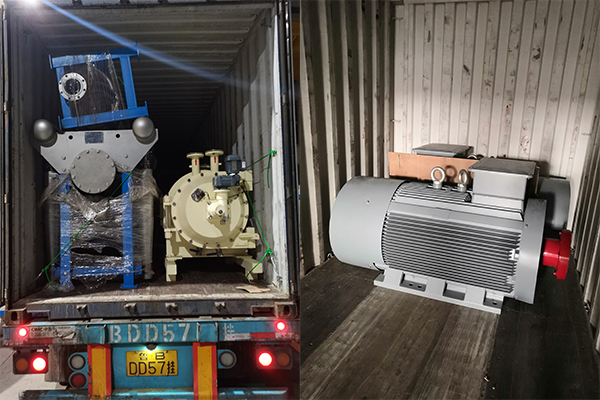
Coating board derives its structural properties from a multi-layer construction, typically with 3 to 5 plies, each using different furnish compositions optimized for their function:
- Top ply (15–25% of total grammage): Bleached chemical pulp for brightness and printability, typically 100% bleached hardwood kraft
- Under-top ply (10–20%): Bleached chemical pulp or mechanical pulp for bulk and coverage
- Middle ply (40–60%): Mechanical pulp, CTMP, or recycled fiber for bulk and stiffness at lowest cost
- Back ply (15–20%): Unbleached or bleached kraft depending on end-use requirements
Each ply requires its own dedicated stock preparation line, including pulping, screening, cleaning, and refining — all independently controlled. Leizhan provides modular stock preparation systems that allow mills to configure individual lines for each ply with the appropriate equipment specifications.
Refining Strategy by Ply
The refining strategy varies significantly between plies:
| Ply | Furnish | Net Refining Energy (kWh/t) | Target Freeness (CSF mL) |
|---|---|---|---|
| Top ply | Bleached hardwood kraft | 50–90 | 300–400 |
| Under-top ply | Bleached kraft / mechanical | 40–80 | 350–500 |
| Middle ply | CTMP / recycled fiber | 30–60 | 450–650 |
| Back ply | Unbleached kraft | 60–120 | 400–550 |
The top ply receives the most intensive refining to ensure good fiber coverage and surface smoothness for coating. The middle ply is refined minimally to preserve bulk and stiffness — over-refining the middle ply reduces caliper at given grammage, directly reducing packaging rigidity.
Multi-Ply Forming Technology
Multi-ply forming is the defining technology of coating board production. The three main forming configurations are:
Multi-Fourdrinier Formers
Each ply is formed on a separate fourdrinier wire and then couched together. This configuration provides independent control of each ply’s basis weight and formation but requires significant machine length. Typical wire widths for coating board range from 2.8 to 5.0 meters with design speeds of 400–900 m/min.
Cylinder Mould Formers
Multiple cylinder moulds (vats) build up plies sequentially on a common felt. Cylinder formers produce board with high ply bond strength due to wet-on-wet ply adhesion but have lower speed capability (200–500 m/min) compared to fourdrinier configurations.
Hybrid Formers
Modern coating board machines increasingly use hybrid configurations, combining a fourdrinier for the top ply with cylinder moulds or mini-fourdriniers for middle and back plies. This balances quality and capital efficiency.
Ply bond strength between layers must exceed 150 J/m² (Scott bond) to prevent delamination during printing and converting. Spray starch application between plies at 0.3–0.8 g/m² improves ply bond without affecting board stiffness.
Coating Kitchen and Application Technology
The coating operation transforms raw board into a printable surface. A coating kitchen prepares and supplies coating color at controlled solids, viscosity, and temperature to the coating stations. Typical coating formulations include:
- Pre-coating: 100% carbonate pigment + starch or latex binder, 60–65% solids, coat weight 8–15 g/m² per side
- Top coating: Carbonate + clay blend (70/30 to 90/10) + latex binder, 62–68% solids, coat weight 8–12 g/m² per side
- Binder level: 10–14 parts per 100 parts pigment for pre-coat, 12–18 pph for top coat
Coating application methods include:
- Blade coating: Produces the smoothest surface (PPS roughness <1.0 µm) but is sensitive to base sheet defects
- Rod (Meyer bar) coating: Better coverage of surface irregularities, suitable for pre-coating with PPS roughness target <2.5 µm
- Curtain coating: Non-contact application providing excellent coverage at high speeds, coat weight uniformity ±5%
After coating, infrared dryers and air flotation dryers evaporate water from the coating layer. Drying capacity of 40–80 kg H₂O/m²·h per coating station is typical, with total thermal energy consumption of 80–150 kWh/t for the coating drying section.
Energy and Resource Efficiency in Coating Board Production
Coating board production is energy-intensive due to multiple drying stages — the board is dried after forming, after each coating station, and sometimes after calendering. Total specific energy consumption ranges from 2,500–3,500 kWh/t depending on machine configuration and coat weight:
| Energy Consumer | Share of Total | Optimization Potential |
|---|---|---|
| Main dryer section | 45–55% | Hood heat recovery saves 10–15% |
| Coating dryers (IR + air) | 15–25% | Higher coating solids reduce drying load |
| Stock preparation | 8–12% | Efficient refining and screening design |
| Vacuum system | 6–10% | Optimal vacuum pump sizing |
| Drives and auxiliaries | 5–8% | Variable frequency drives |
Coating color solids content has the single largest impact on dryer energy — increasing pre-coat solids from 62% to 66% reduces drying energy by 10–12% at that station. Similarly, maintaining Yankee/cylinder surface cleanliness prevents heat transfer degradation that can increase steam consumption by 5–8%.
Quality Control and Maintenance for Coating Board Lines
The multi-stage nature of coating board production means that quality deviations at any stage cascade through subsequent operations. Critical quality control points include:
- Ply basis weight monitoring: Online sensors for each ply before combining ensure correct layer proportions. Target deviation under ±2.0% of nominal per ply.
- Moisture profile after each dryer: CD moisture variation under 1.5% before coating prevents uneven coating pickup and mottling.
- Coating weight measurement: Differential scanning before and after each coating station, target variation ±1.0 g/m².
- Surface inspection: Automated web inspection systems detect coating scratches, streaks, and spots at full production speed.
Maintenance scheduling must accommodate the complexity of coating board lines:
- Coating blades: Change every 8–24 hours depending on coat weight and abrasiveness. Worn blades produce streaks and uneven coating profiles.
- Coating color filtration: Pressure screens with 100–150 µm slots protect coating application equipment. Screens cleaned daily.
- Dryer fabric cleaning: High-pressure showers every 4–8 hours of operation prevent coating chemical buildup that reduces permeability.
- Calender roll maintenance: Soft calender rolls re-ground every 3–6 months; hard rolls (chilled iron) every 12–24 months.
Zhengzhou Leizhan Technology supplies stock preparation equipment for all plies of coating board production lines — from pulping and screening to refining and approach flow. Our modular systems enable mills to configure dedicated preparation lines for each ply, with the independent control that multi-ply board quality demands.
Contact us at leizhanzhang@gmail.com | Zhengzhou Leizhan Technology Paper Machinery Co., Ltd.